From Steel to Sea Life: How Biofilms Turn Shipwrecks into Thriving Reefs
From colonization to complexity: the science behind artificial reefs
Beneath the ocean’s surface, shipwrecks tell a story that goes far beyond their sinking. What begins as cold, corroding metal slowly transforms into something alive, a thriving underwater ecosystem. At the heart of this transformation is something almost invisible: biofilm.
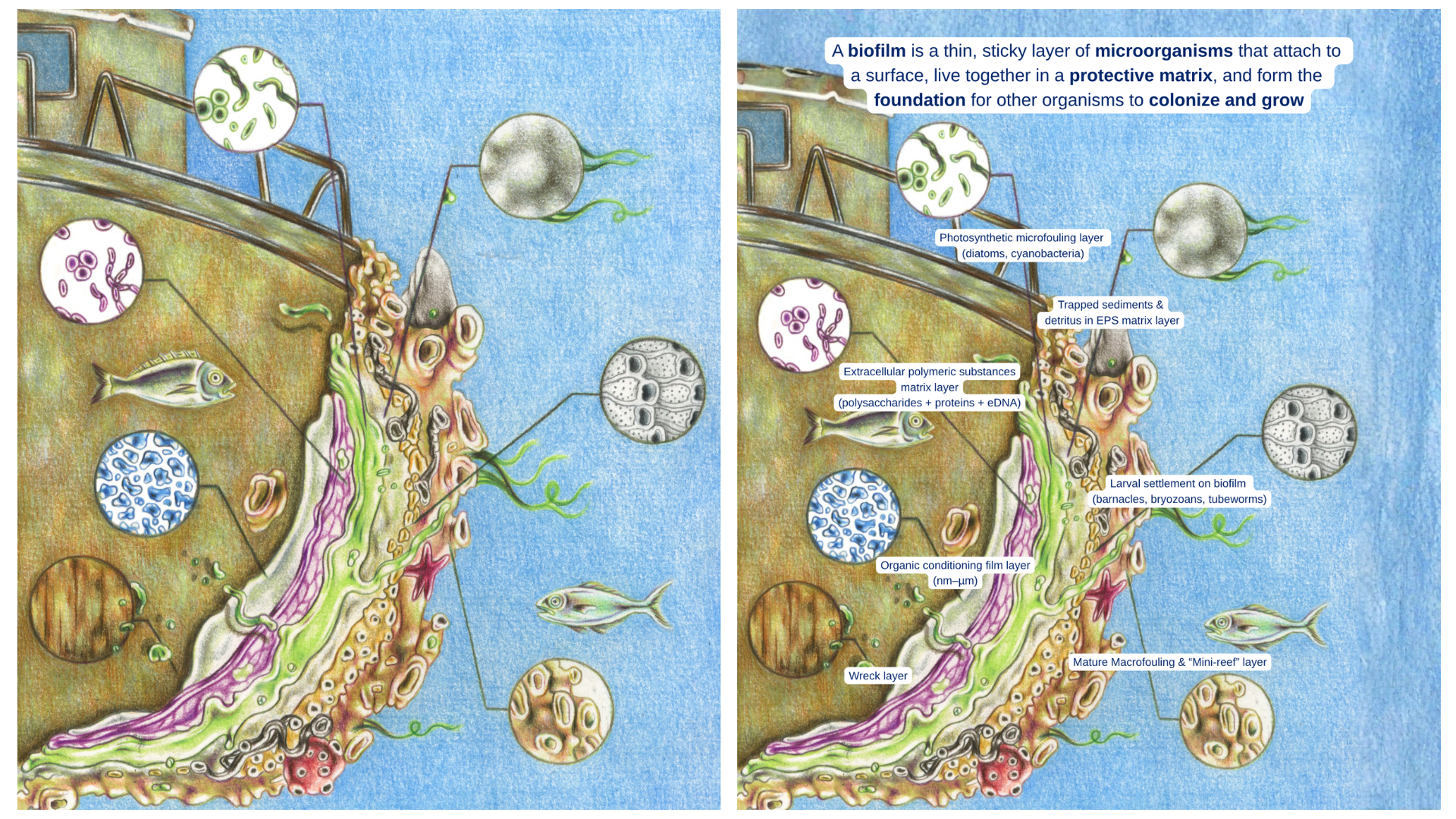
A biofilm is a thin, sticky layer of microorganisms that attach to a surface and live together within a self-produced protective matrix. While it may seem insignificant, this microscopic layer is the foundation upon which entire marine communities are built. Let’s dive into how this transformation unfolds: layer by layer.
The First Step: A Surface for Life
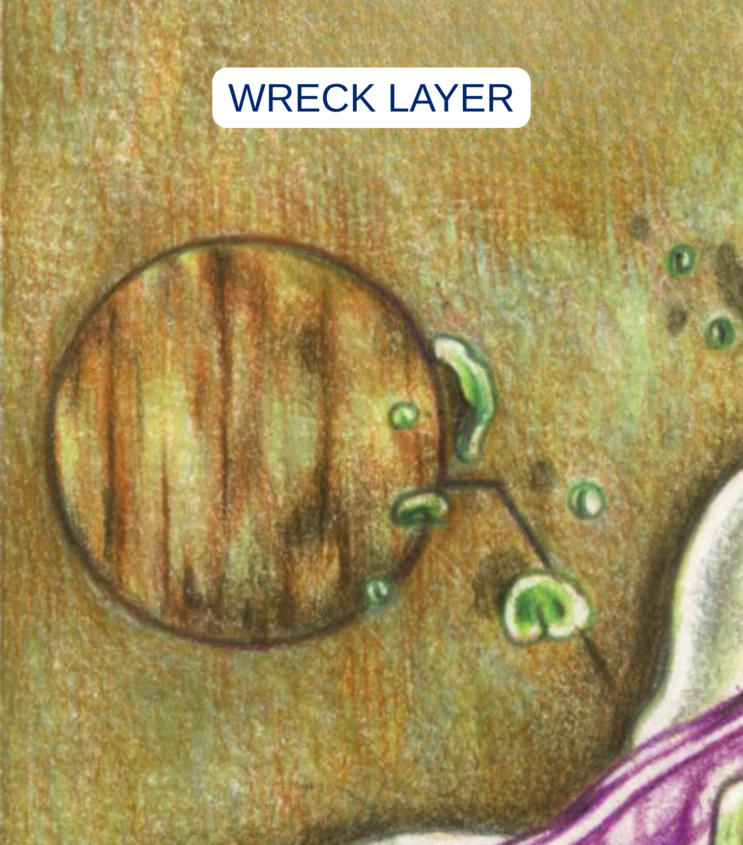
Every reef needs a foundation. In the case of shipwrecks, that foundation is the wreck itself.
Once submerged, the ship’s surface begins to change. Corroded steel and mineral deposits create a rough, chemically active environment. These irregular textures are crucial. They provide the grip and chemical signals needed for the very first colonizers to attach.
Without this substrate, nothing else can follow.
An Invisible Transformation
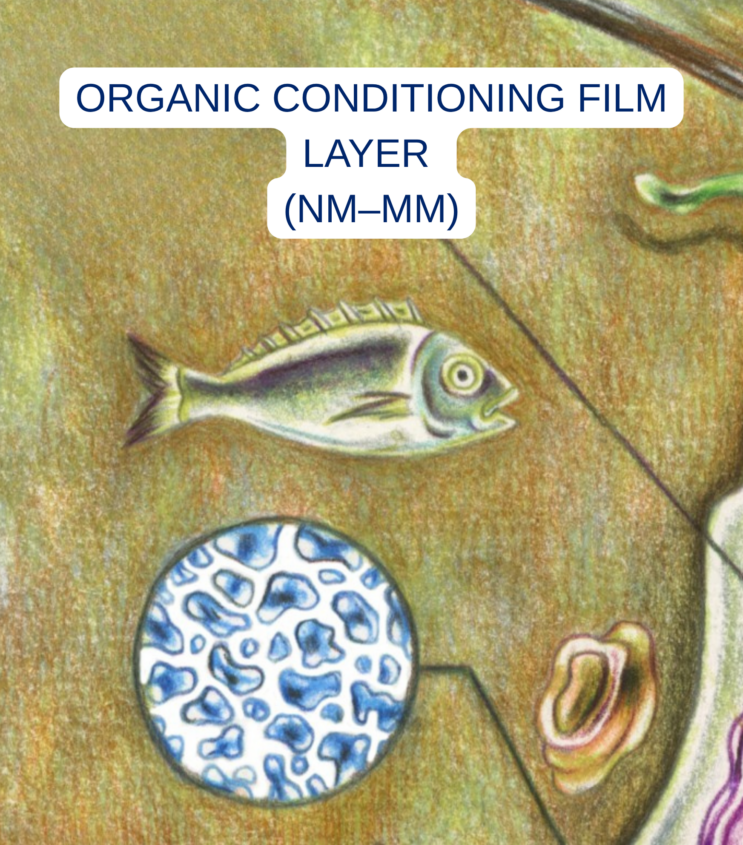
Almost immediately, the wreck is coated by a microscopically thin layer known as the organic conditioning film.
This film is made up of organic molecules: proteins, lipids, and polysaccharides, naturally present in seawater. Though invisible, it fundamentally alters the surface by making it more “wettable” and sticky, preparing it for microbial life.
It’s the ocean’s way of preparing the ground for colonization.
The Birth of Biofilm
With the surface primed, microorganisms begin to settle.
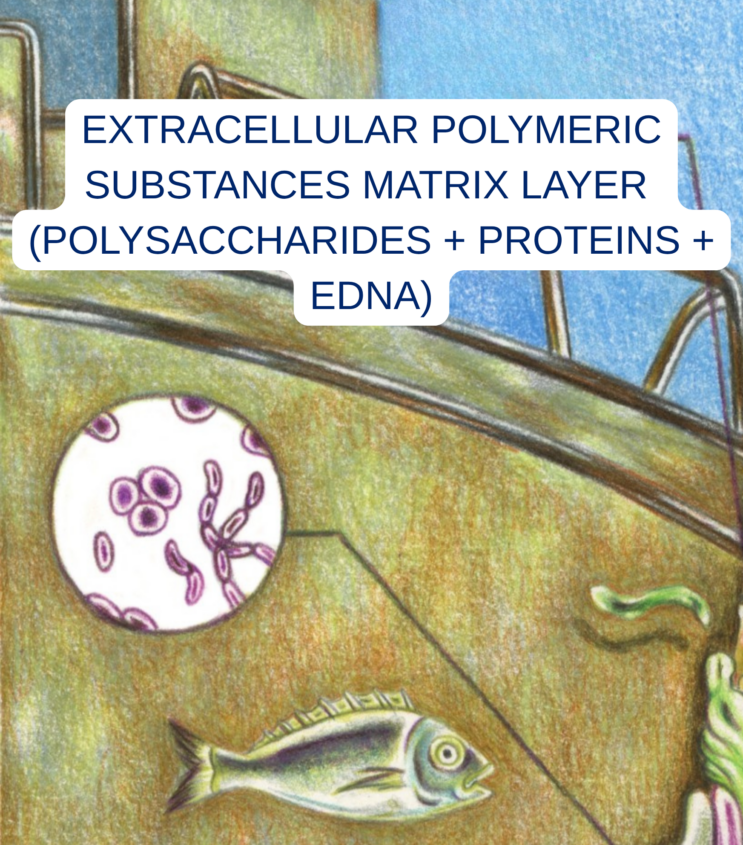
Bacteria and other microbes attach themselves and start producing a gel-like substance known as the extracellular polymeric substances (EPS) matrix. This matrix acts like a biological glue, holding the community together and anchoring it to the wreck.
Inside this slimy layer:
- Microbes form structured communities
- Nutrients and chemical signals are exchanged
- Cells are protected from environmental stress
The biofilm is now a living, functional system.
When the Biofilm Comes Alive
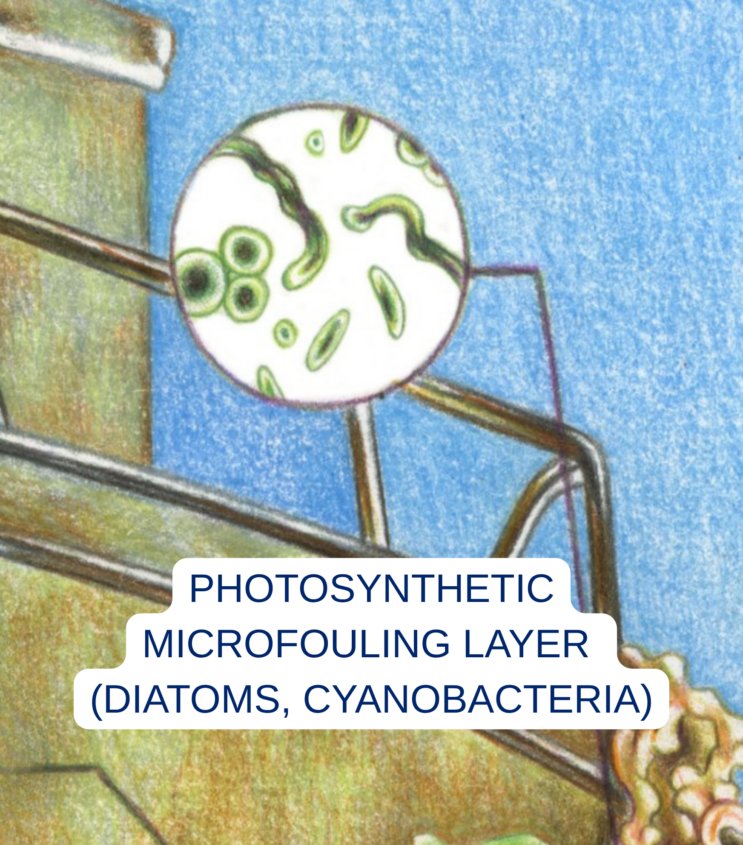
As the biofilm matures, photosynthetic organisms such as diatoms and cyanobacteria begin to dominate.
These microscopic algae add a greenish-brown “slime” layer and, more importantly, bring energy into the system through photosynthesis.
This marks a turning point:
The wreck is no longer just being colonized, it is now producing energy and supporting life.
Building Complexity: Trapping the Ocean
The sticky nature of the biofilm allows it to capture particles drifting through the water.
Sediments, organic detritus, and microscopic debris become trapped within the EPS matrix, forming a loose “fluff” layer on top of the biofilm.
This process:
- Concentrates nutrients
- Alters local sediment dynamics
- Creates new microhabitats
In essence, the biofilm begins to engineer its own environment.
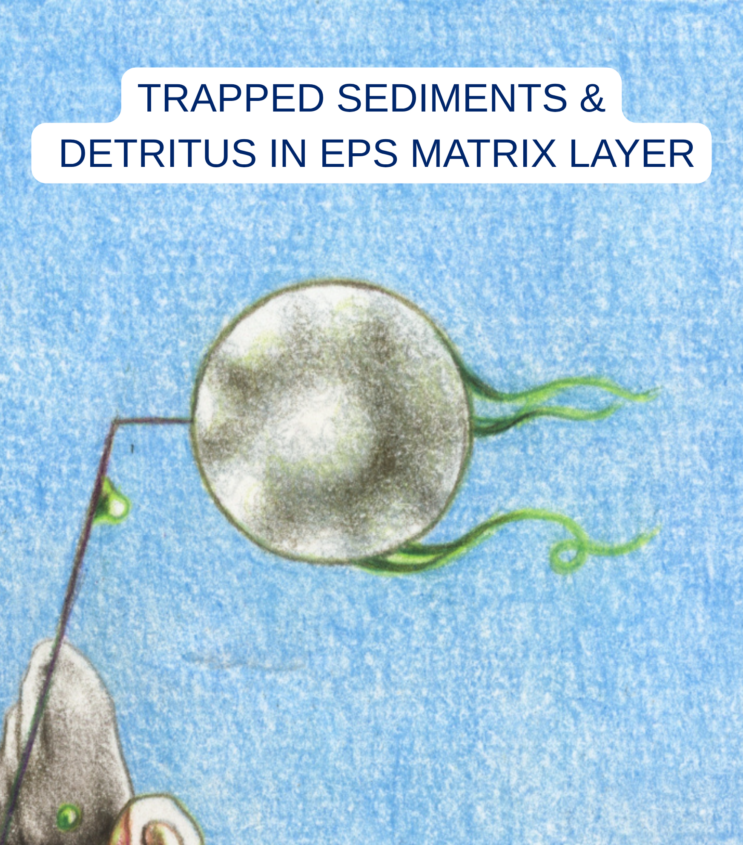
The Arrival of Larger Life
With a mature biofilm in place, the stage is set for more complex organisms.
Larvae of marine invertebrates, such as barnacles, bryozoans, and tubeworms, detect chemical cues from the biofilm and settle onto the surface.
This is no coincidence.
Biofilms act as biological signals, indicating that the surface is stable and suitable for life.
These early settlers anchor themselves, grow, and begin to form the first visible structures on the wreck.
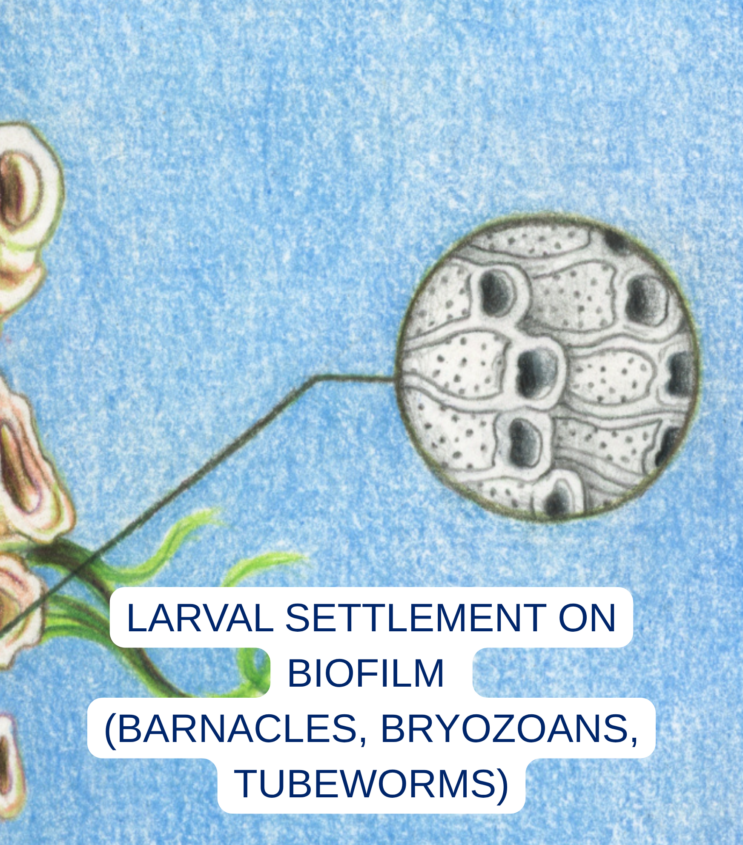
From Wreck to Reef
Over time, the accumulation of organisms transforms the wreck into a miniature reef.
Encrusting algae, sponges, corals, and a wide range of invertebrates build layer upon layer, forming a complex and stable ecosystem.
What was once a man-made object becomes:
- A habitat for marine species
- A hotspot for biodiversity
- A functioning part of the ocean ecosystem
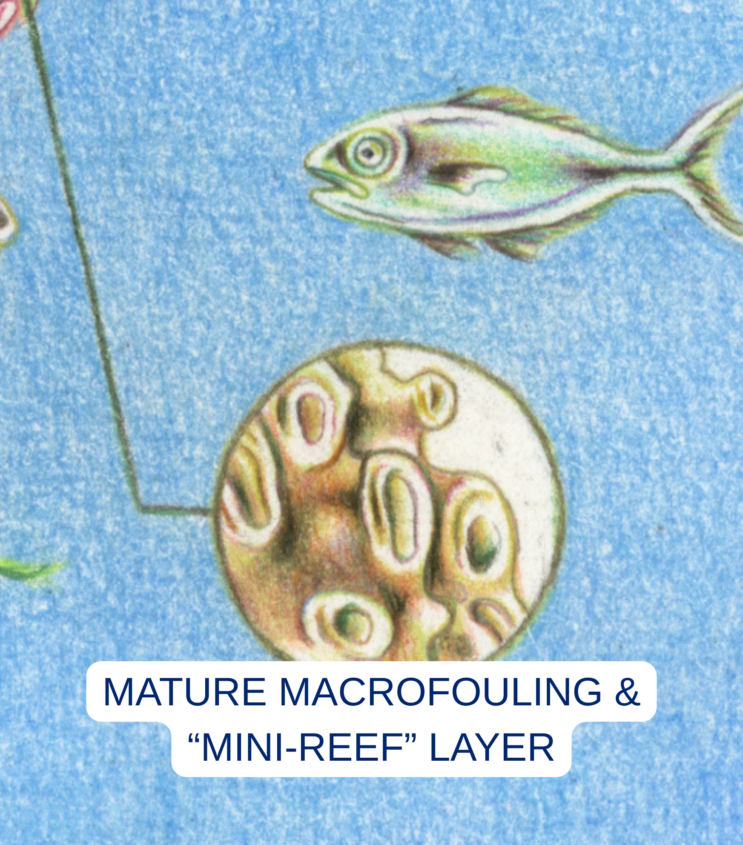
A Hidden Story of Creation
Shipwrecks are often seen as relics of loss, symbols of what has been left behind.
But underwater, they tell a different story.
Through the quiet, persistent work of microorganisms, they are transformed into places of growth, diversity, and life. The process is slow, layered, and largely invisible, yet it underpins entire ecosystems.
What begins as steel ends as a reef.
And it all starts with a film too small to see.
Why biofilm matters
Biofilms are often overlooked because they are microscopic. But their impact is immense.
They:
- Enable life to attach to new surfaces
- Facilitate nutrient cycling
- Influence which species can settle and grow
- Drive the transition from bare substrate to thriving ecosystem
Without biofilm, shipwrecks would remain largely lifeless structures on the seafloor.
From Theory to Reality: A Wreck in Recovery
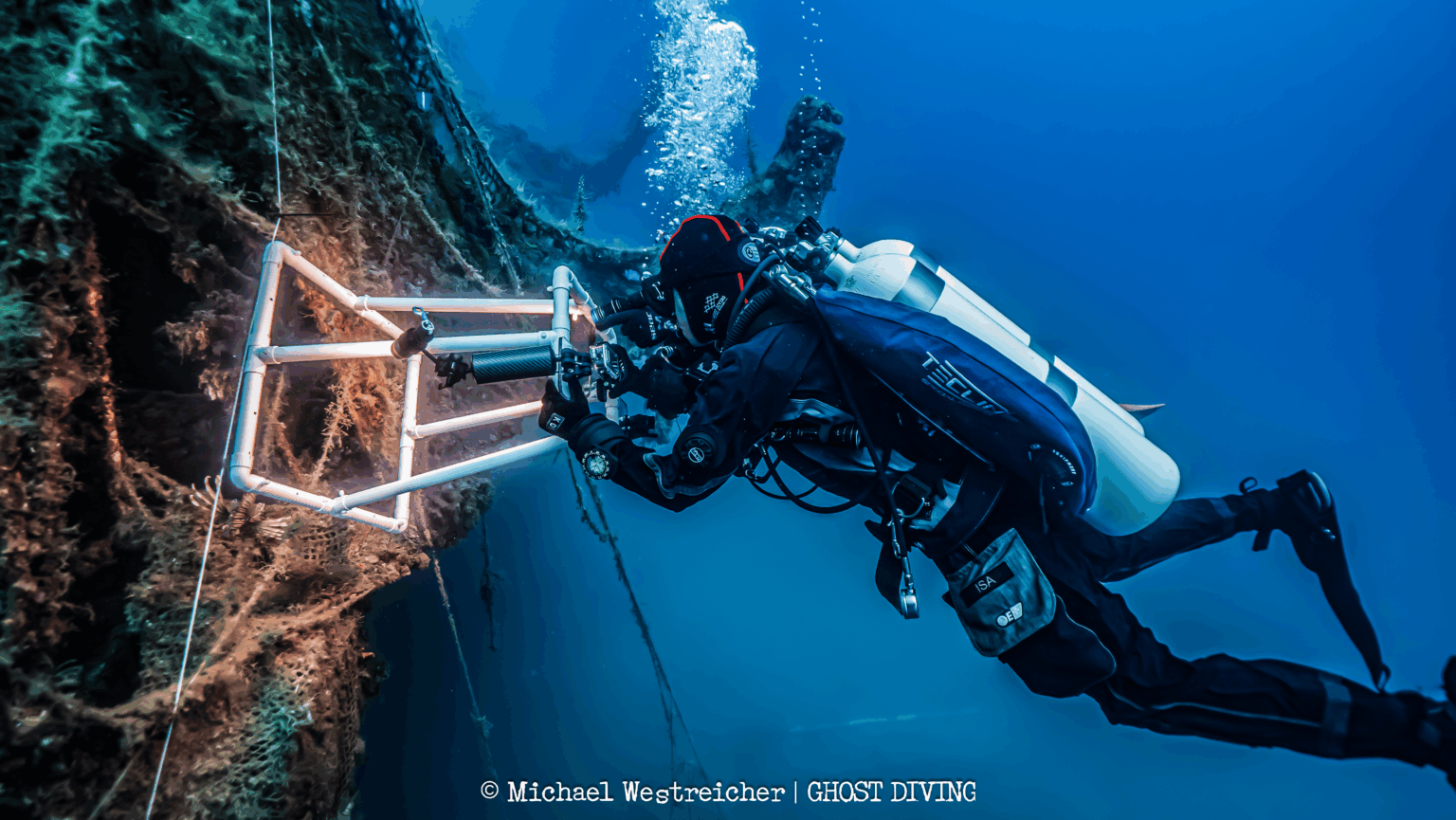
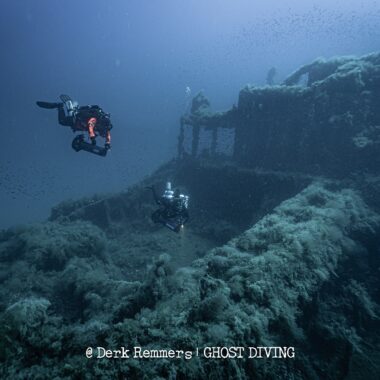
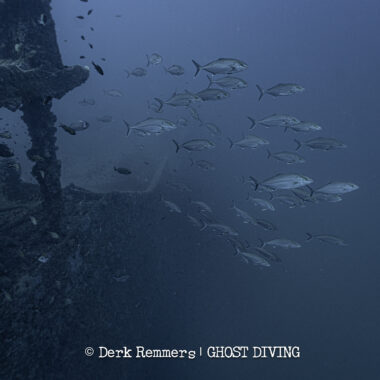
This process is not just theoretical. It is happening right now. At a shipwreck site in Zakynthos, our team removed ghost nets that had been covering the structure. Now, with those surfaces exposed again, the shipwreck-reef can start to grow again.
From the first microbial films to the growth of visible marine communities, the wreck is now again on its path from steel to reef.
Other content related to the mission and the collaboration with DWS

Wrecks of Life: Tracking Biodiversity After the Nets
Science is our compass in the vast ocean of uncertainty, guiding us not only to restore the blue heart of the planet, but to secure a future where nature can thrive. A New Mission with DWS: Investigating Life After Ghost Nets From May 18th to 25th, Healthy Seas carried out the first part of a […]

Deep Blue Legacy: From Shipwrecks to School Desks
What kind of legacy do we leave behind? That question guided us last year during the Deep Blue Legacy cleanup expedition in the high seas—a mission to remove ghost nets from historical WWII shipwrecks, supported by our partner DWS. The goal was twofold: to preserve these fragile underwater heritage sites and to make them safer […]