
Ghost Farms Don’t Appear Overnight
Why governance and the decisions made long before a farm is built can determine whether marine pollution happens at all
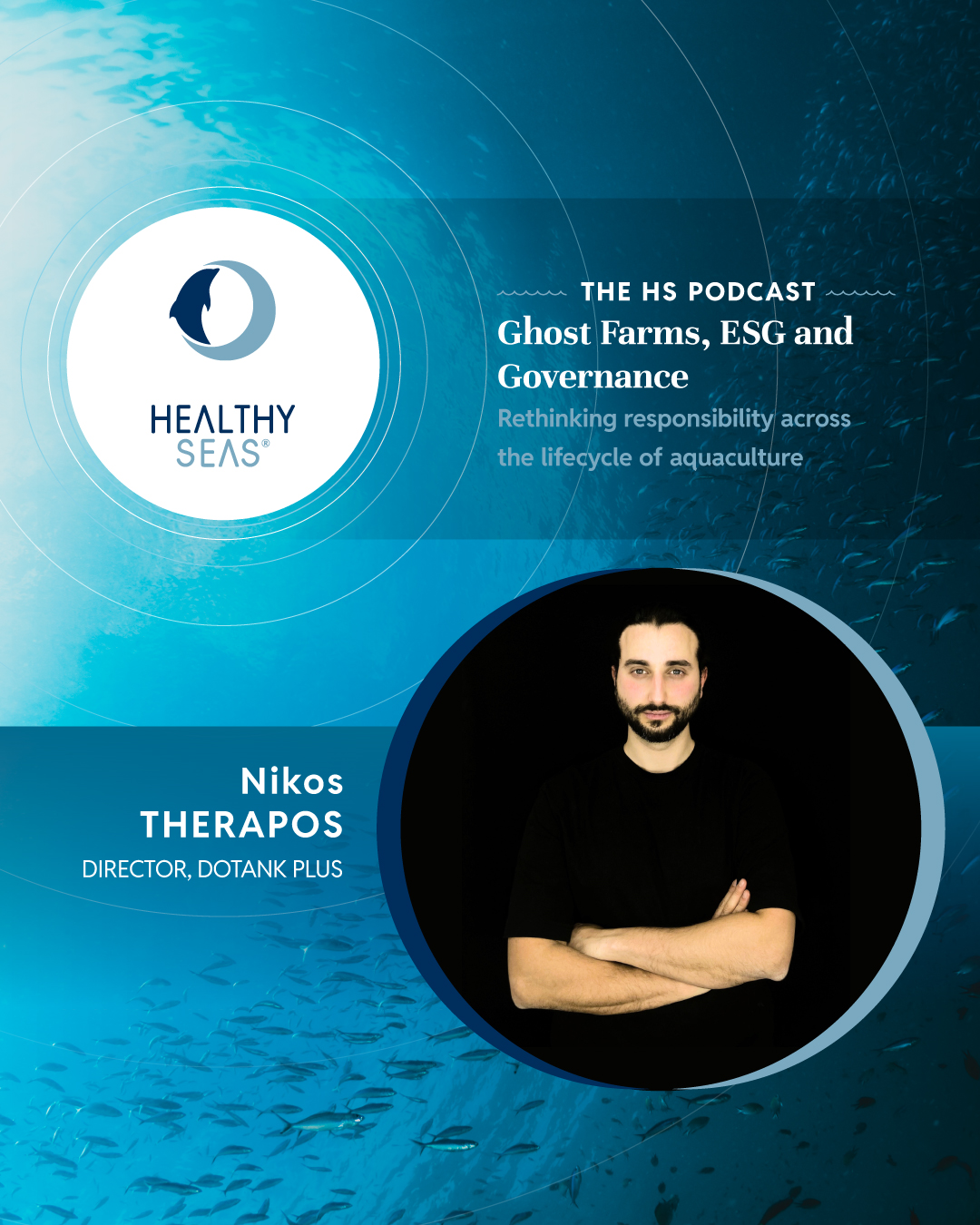
In this episode of the Healthy Seas podcast, we are joined by Nikos Therapos of DOTANK Plus, a sustainability and governance expert, to explore a different side of the ghost farm issue—one that begins long before cleanup is ever needed.
A ghost farm does not begin as a ghost. It starts as a functioning aquaculture site planned, designed, approved, and operated. Cages are installed, production begins, and for a time, everything works as intended.
But years later, when operations stop, what remains can tell a very different story. Structures left behind in the sea slowly degrade. Nets break down. Materials become marine litter. What was once infrastructure becomes pollution.
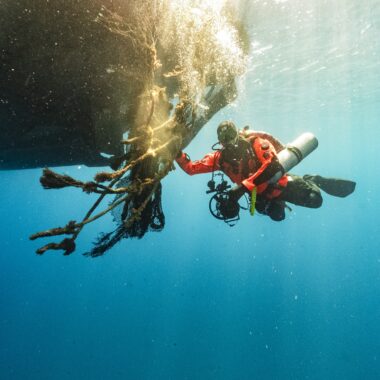
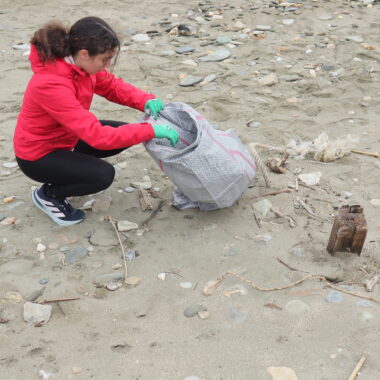
At Healthy Seas, we have seen this transformation firsthand. Through our Ghost Farms – Reclaiming Waters initiative, we have removed abandoned aquaculture structures from coastal areas in Greece—recovering materials that continue to damage marine ecosystems long after their economic life has ended.
And this raises an important question: When does a ghost farm really begin?
Looking upstream: from cleanup to decision-making
It is easy to see ghost farms as an environmental problem. But they are also the result of earlier decisions—often made years before any impact becomes visible.
How was the farm designed? What plans existed for its removal? Who is responsible once operations end?
These are not questions for divers or cleanup teams. They are questions of governance. And this is where frameworks like ESG—Environmental, Social and Governance—become relevant.
Governance as prevention
ESG is often associated with reporting, metrics, and corporate disclosures. But at its core, it is about something much more practical: how companies take responsibility for the full lifecycle of their activities.
In aquaculture, this means thinking beyond production:
- What happens at the end of a project’s life?
- Are there clear plans and resources for decommissioning?
- Are environmental risks monitored over time—not just during operations?
When these elements are built into governance systems from the beginning, the risk of abandonment could decreases significantly. When they are not, the consequences often emerge later—and elsewhere.
When responsibility shifts
In many cases, abandoned fish farms are not the result of a single failure, but of a system that did not fully account for long-term responsibility. Ownership structures change: companies exit the market, regulatory oversight becomes fragmented, and gradually, the burden of addressing the problem shifts from operators… to public authorities, from companies… to local communities, from planning… to remediation.
By the time cleanup begins, the environmental and economic costs have already increased.
Why transparency is not enough
New regulations, such as the EU’s Corporate Sustainability Reporting Directive (CSRD), aim to improve transparency and standardize how companies report environmental impacts. This is an important step. But transparency alone does not prevent pollution.
What it can do is make risks visible earlier to investors, regulators, and society and create incentives for companies to act before problems materialize.
In this sense, ESG and reporting frameworks are not solutions on their own, but tools. Their effectiveness depends on how they are used. As a compliance exercise or as a way to guide long-term decision-making
From field experience to future practice
At Healthy Seas, our work does not stop at cleanup. Alongside removing ghost farms, we bring this field experience into universities through educational programs such as Net Positive, engaging students in discussions on governance, circular economy, and environmental responsibility.
Because preventing ghost farms is not only about removing what is already there. It is about changing how future projects are designed, managed, and eventually closed.
Rethinking where environmental problems begin
Ghost farms are visible. They are tangible, physical reminders of what has been left behind.
But the real starting point is less visible. It lies in planning documents, governance systems, and decisions made long before any impact reaches the sea.
If we want to address marine pollution more effectively, we need to look not only at what we remove but at what we choose to build, and how we take responsibility for it over time.
📩 Subscribe to the Healthy Seas newsletter
💖 Discover more on Ghost Farms mission done by Healthy Seas with the support of our partner Hyundai