Healthy Seas at the Salone della CSR 2026: From Cleanup to Systems Change
At Bocconi University in Milan, Healthy Seas joined the conversation on the future of the Blue Economy, sharing how ocean conservation can move beyond one-off interventions towards science, prevention, collaboration and lasting change.
What does effective ocean conservation look like when we move beyond cleaning up what has already gone wrong?
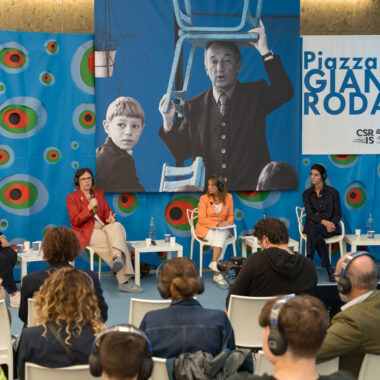
This was one of the questions Healthy Seas brought to the 2026 Salone della CSR e dell’innovazione sociale, held at the prestigious Bocconi University in Milan.
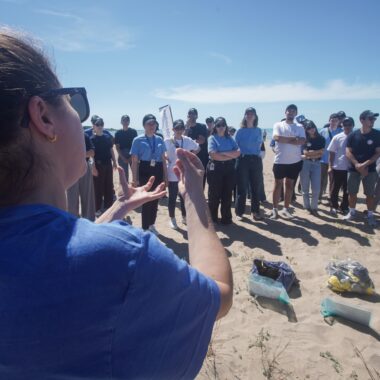
During the panel “Blue Economy: the importance of protecting the marine ecosystem,” Healthy Seas Communications Manager Samara Croci joined representatives from shipping, seafood production and sustainable tourism to discuss how businesses, institutions, researchers and civil society can work together to protect our seas.
The conversation reflected an evolution that has also been taking place within Healthy Seas itself. Over thirteen years, our work has grown from a strong focus on removing fishing nets and other marine litter to an increasingly integrated approach combining cleanup, prevention, education, scientific research, circularity and stakeholder engagement. Because removing waste from the sea matters. But understanding why it was there in the first place, and how to stop it from coming back, matters just as much.
When a cleanup becomes a model for change
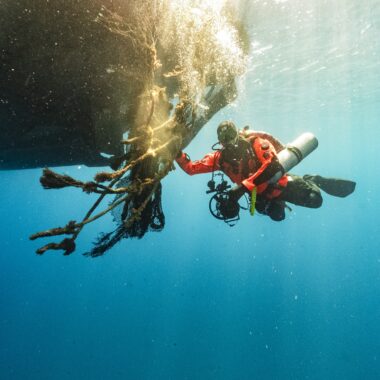
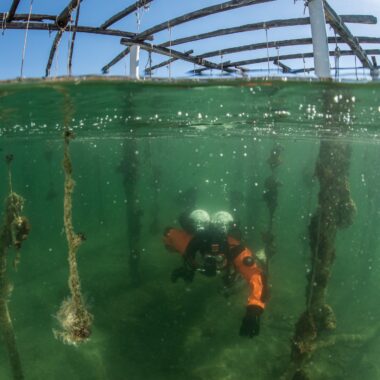
One of the clearest examples is our Ghost Farms programme in Greece, developed over the past five years with the support of Hyundai. Abandoned aquaculture sites can leave behind cages, nets, ropes, anchors and other infrastructure for years. In several of the locations where Healthy Seas has worked, communities had been living alongside these abandoned structures for close to a decade.
Initially, the challenge was practical: how do you safely remove infrastructure of this scale from the marine environment? Over successive projects, Healthy Seas and its partners developed the technical knowledge, logistics and network needed to do it. But the work also exposed a more systemic problem: fragmented responsibilities, complex permitting and uncertainty over who should ultimately be accountable for abandoned sites. So the project evolved.
Today, Ghost Farms also includes surveys and mapping, environmental monitoring, education, dialogue with authorities and work aimed at improving prevention and governance. And in 2026 came an important sign of progress: an abandoned site was cleaned up by its owners following sustained pressure and engagement, rather than by Healthy Seas.
That may sound like a project we didn’t carry out. In many ways, however, it represents exactly the kind of impact we want to achieve. The best cleanup is ultimately the one we no longer need to do ourselves.
Partnerships that multiply impact
The Salone also offered an opportunity to reflect on what makes corporate partnerships genuinely valuable. Healthy Seas is funded by business partners, but the strongest collaborations go well beyond financing an operation.
Different partners can bring different assets: expertise, people, platforms, technology, access to communities or the ability to take an environmental issue to audiences a conservation organisation might never reach on its own.
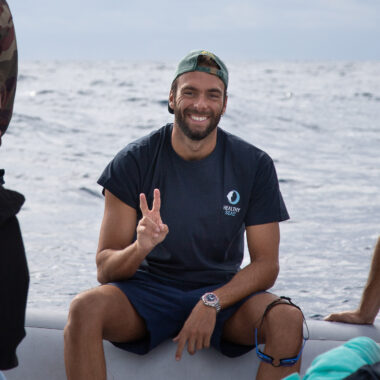
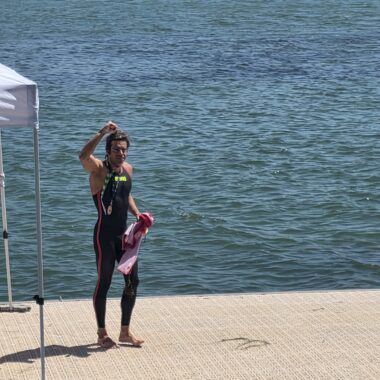
Our work with Arena is one example. Just days before the Salone, Olympic champion Gregorio Paltrinieri joined Healthy Seas and Ghost Diving volunteers during a marine cleanup mission in Sicily. He experienced first-hand the work involved in recovering lost fishing gear and examining the marine life interacting with it. Through Arena, these experiences can travel far beyond the people physically present at the operation, reaching athletes, customers, schools and wider communities.
Our long-term collaboration with DWS shows another important dimension of partnership. Through Operation Deep Blue Legacy, ghost-net recovery from historical wrecks in the Mediterranean is combined with scientific research and biodiversity documentation. But the collaboration has also included employee engagement initiatives and an ambassador programme, helping DWS employees understand the projects more deeply, experience the issues first-hand and become more active participants in the sustainability work their company supports.
This matters because employee engagement is not simply about creating external ambassadors. It is about helping sustainability become something people inside an organisation can understand, connect with and participate in.
The strongest partnerships therefore create value on several levels at once: they can support conservation in the field, generate knowledge, involve employees, reach new audiences and build a stronger culture of responsibility within the organisation itself. The value of collaboration is not simply in how many organisations participate, but in what becomes possible because they work together.
Projects as proof that solutions are possible
One idea from the panel resonated particularly strongly with us: projects can also act as testimony. They make environmental challenges tangible.
A problem such as marine pollution, biodiversity loss or inadequate governance becomes easier to understand when it is connected to a real coastline, a wreck, an abandoned fish farm or a community living with its consequences.
But projects can also make solutions visible. Repeated action creates experience. Experience creates knowledge. And knowledge can become a model that others can replicate, improve or eventually take responsibility for themselves. This is why Healthy Seas increasingly asks not only: What did we remove? But also: What did we learn? Who did we involve? What changed because we were there? And can this project help prevent the same problem somewhere else?
Bringing ocean conservation into the business conversation
Being part of the Salone della CSR at Bocconi was especially valuable because ocean conservation belongs in the wider sustainability and business conversation. Healthy seas support food systems, tourism, coastal communities, shipping and countless economic activities. At the same time, businesses influence marine ecosystems through their operations, value chains and choices.
Protecting the ocean therefore cannot remain the responsibility of conservation organisations alone. For companies looking to engage, perhaps the most useful question is no longer simply: “Which environmental project can we support?” But it is: “What change can we help make possible?”
A cleanup may be the starting point. But the most powerful partnerships can help create knowledge, engage communities, support science, influence behaviour, strengthen governance and sometimes make the next cleanup unnecessary.
That is where ocean conservation starts becoming systems change.