
Hyundai and Healthy Seas Begin 2026 Activities in Türkiye with Education and Coastal Action
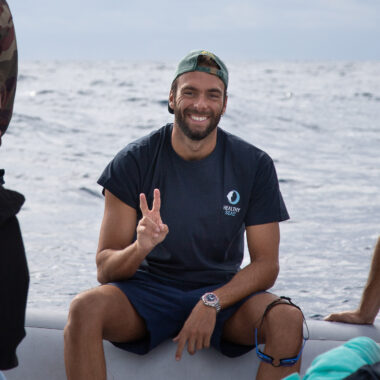
On 15 June 2026, Healthy Seas joined Hyundai Motor Türkiye for a day dedicated to ocean protection and coastal action.
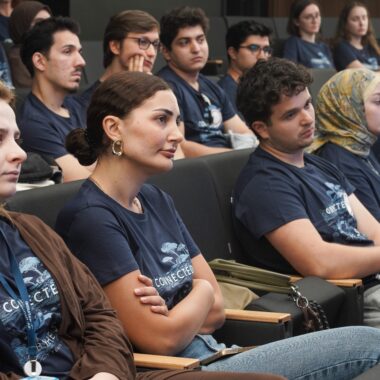
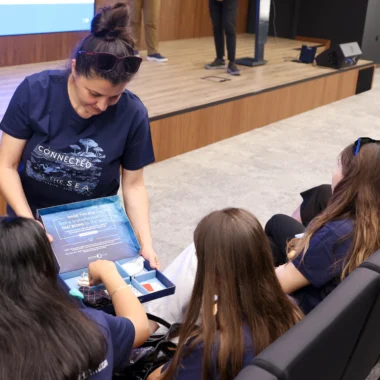
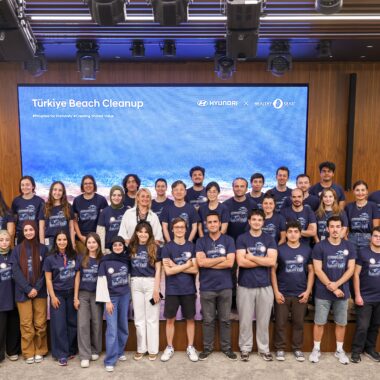
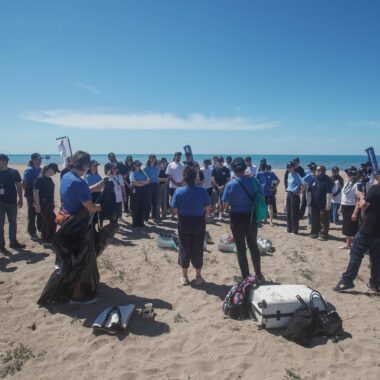
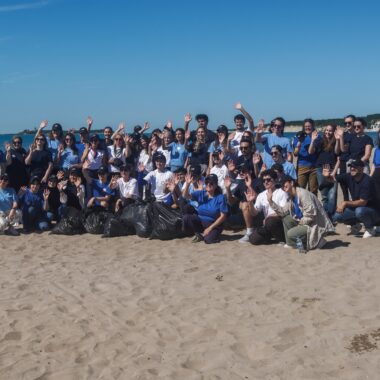
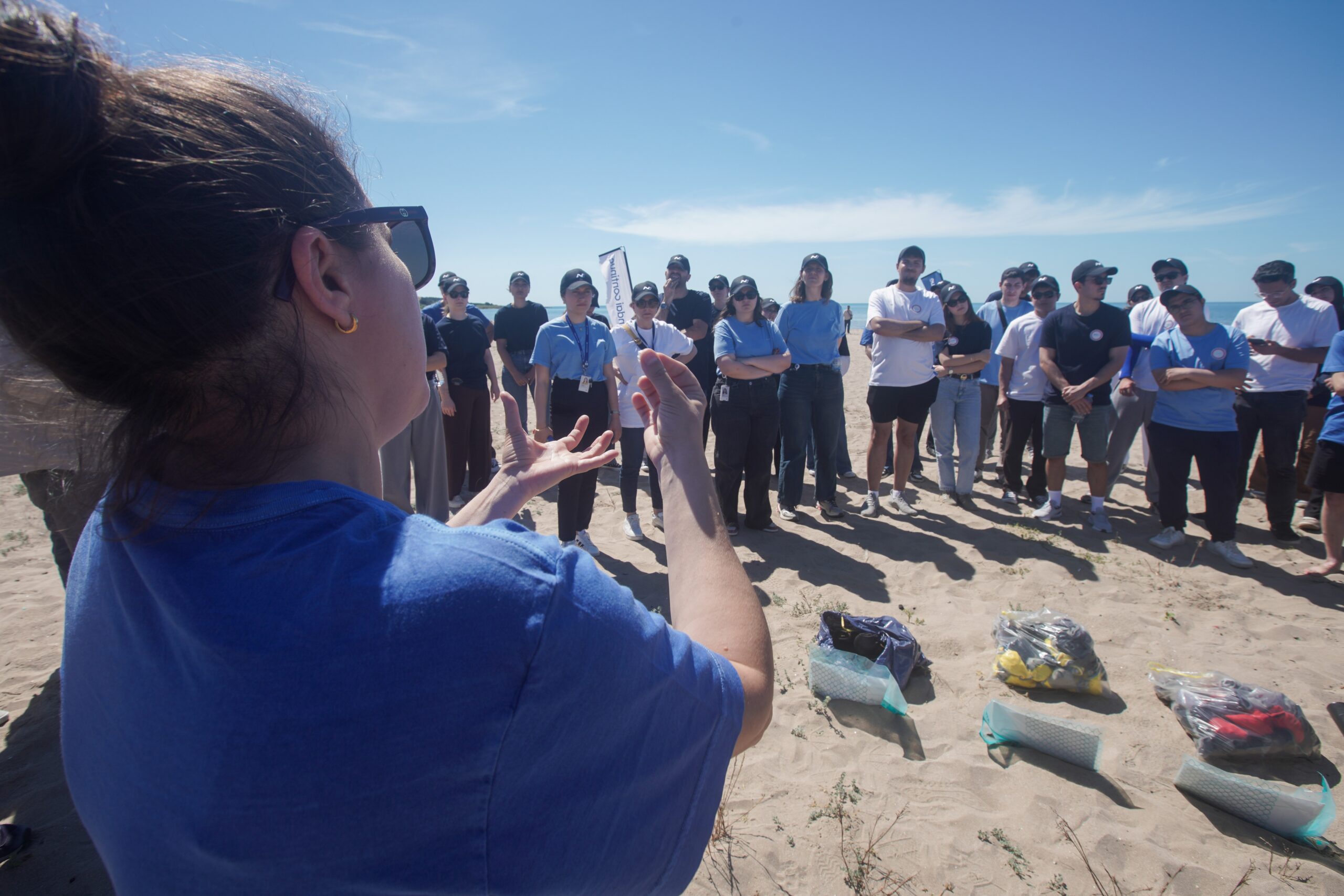
The event brought together more than 50 participants, including Hyundai Motor Türkiye employees and university students from the TEV (Turkish Education Foundation) scholarship programme supported by Hyundai. It marked the beginning of joint activities in Türkiye, connecting education, employee engagement, youth involvement, and practical action for healthier seas.
The day began on land, inside Hyundai Motor Türkiye’s plant in İzmit.
From the factory floor to the shore
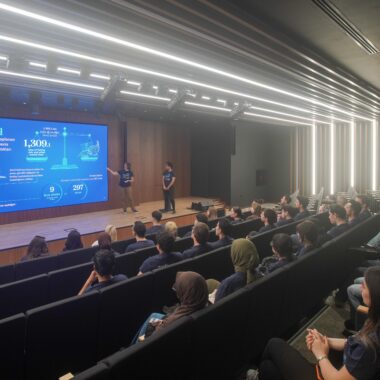
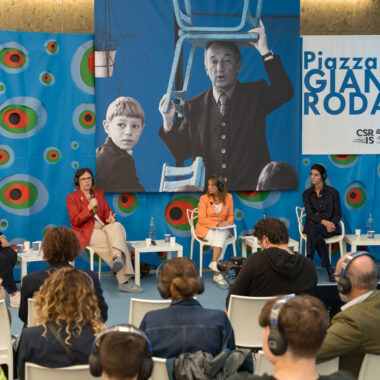
The morning opened with a welcome session, a Hyundai presentation, and a visit to the facility. The setting offered a meaningful starting point for the day: a place where innovation, production, and responsibility meet.
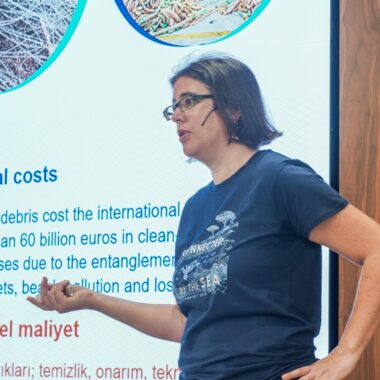
The Healthy Seas presentation then introduced the wider issue of marine litter. Participants learned about ghost nets, abandoned fish farms, clean-up missions with divers and coastal communities, education programmes, prevention, and the importance of designing systems where waste does not become a permanent burden.
The students brought sharp and honest questions into the conversation. Does it make sense to recover synthetic fibres and turn them into new synthetic products? What is failing in the system when abandoned fish farms in Greece are left to degrade for years? Could robots or ROVs be used to recover ghost nets in the future?
These questions opened exactly the kind of discussion Healthy Seas hopes to encourage: one that does not simplify the issue, but looks at its complexity. Circular economy is not a magic trick. Clean-ups are necessary, but they are only one part of a larger challenge involving design, regulation, responsibility, prevention, and behaviour change.
Learning to see pollution differently
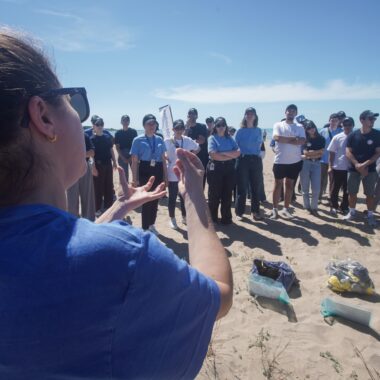
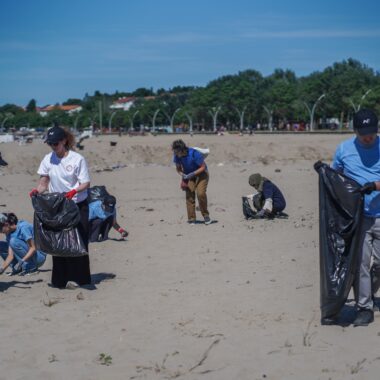
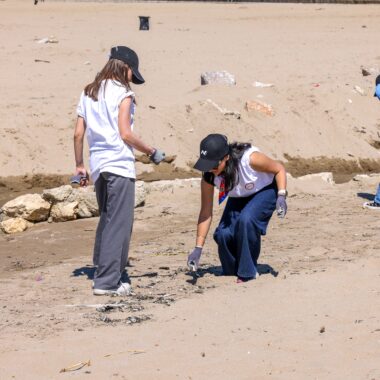
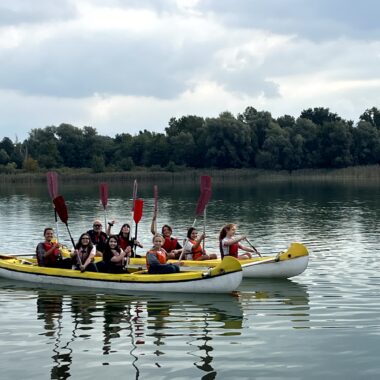
After lunch, the group travelled from İzmit to the Black Sea coast for a beach clean-up. At first glance, the beach did not seem heavily polluted. But this often happens during clean-ups. At the beginning, participants may think there is not much to collect. Then the eye adjusts.
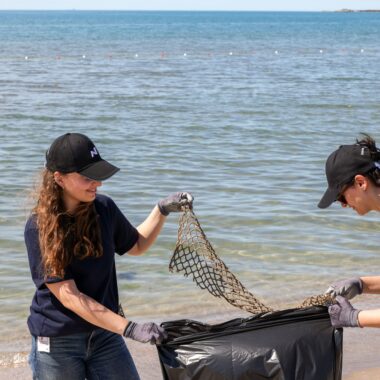
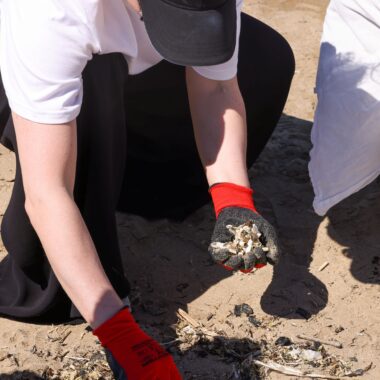
Cigarette butts begin to appear between sand and stones. Small pieces of rope become visible. Bottle caps, polystyrene fragments, plastic utensils, and wiring from burnt tyres emerge one by one. What seemed like a relatively clean beach starts revealing a different story: not one of dramatic, oversized waste, but of small, persistent, easily overlooked pollution.
By the end of the activity, participants had collected approximately 40 kilograms of litter. Beyond the number, the lesson was important: some of the most harmful waste is not always the most visible. Small fragments can be ingested by animals, break down further into microplastics, and move from land to rivers, from rivers to the sea, and eventually into the food web.
For Healthy Seas, this is one of the most powerful aspects of educational clean-ups. They change the way people look. Once someone learns to see cigarette butts, rope fibres, polystyrene pieces, or tiny plastic fragments on a beach, it becomes difficult to “unsee” them.
A local start for a global partnership
The day reflected the broader spirit of the partnership between Healthy Seas and Hyundai, which began in Europe in 2021 and has since expanded through clean-ups, educational programmes, and circular economy initiatives.
In Türkiye, this work now brings together Hyundai Motor Türkiye employees, students, and Healthy Seas’ experience in marine conservation. It shows how ocean protection can begin with knowledge, continue through direct action, and grow through collaboration between companies, communities, and young people.
The beach clean-up did not end with a dramatic mountain of waste. It ended with something quieter but just as important: a group of employees and students who had spent the day asking questions, learning about circular materials, and then kneeling on the sand to collect the smallest traces of pollution.
And perhaps that is where many forms of environmental action begin — not only with what we remove, but with what we learn to notice.