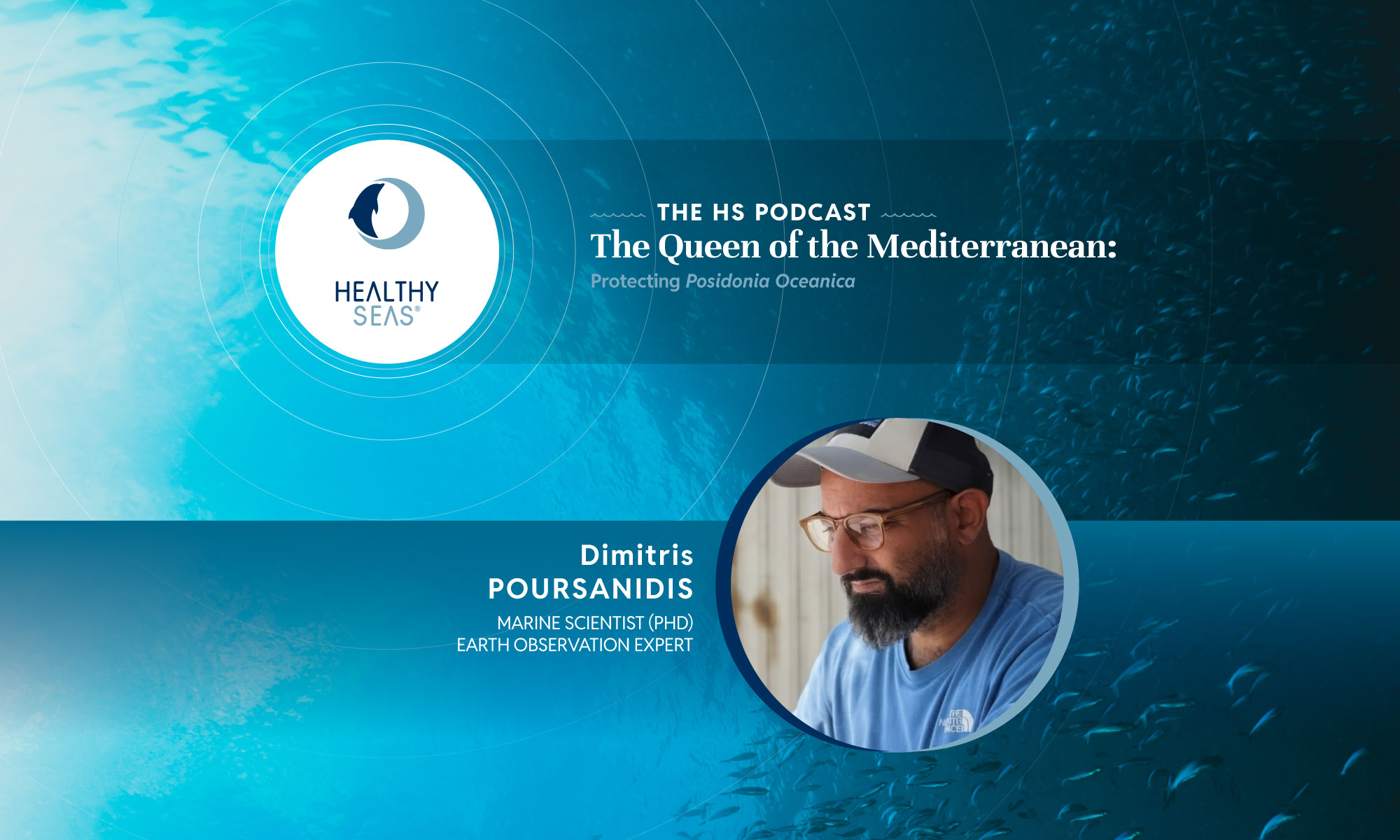

Posidonia oceanica: The Queen of the Mediterranean
The seagrass meadow protecting coastlines, sheltering marine life and quietly sustaining the Mediterranean
Beneath the surface of the Mediterranean grows an ecosystem that can easily be mistaken for seaweed. Yet Posidonia oceanica is a flowering marine plant, with roots, leaves, flowers and seeds and one of the region’s most valuable habitats.
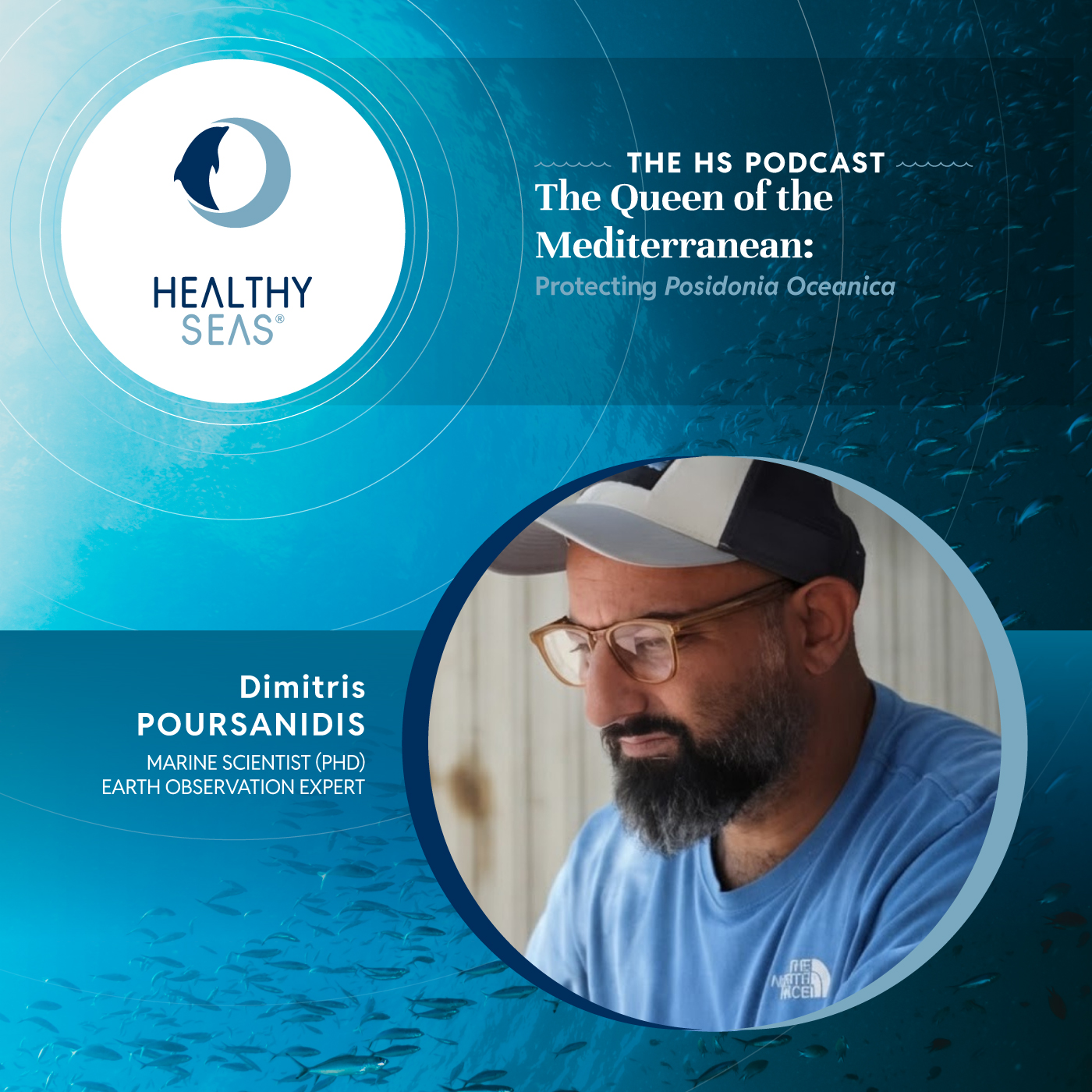
In this episode of the Healthy Seas Podcast, marine scientist Dr Dimitris Poursanidis introduces us to what he calls the “queen of the Mediterranean.” Posidonia meadows can host as many as 1,000 species, offering shelter and nursery grounds to young fish, crustaceans, molluscs and other marine life. They also support small-scale fisheries, improve water quality and reduce the force of waves before they reach the coast.
But these underwater meadows are extraordinarily slow to recover. Posidonia spreads by only a few centimetres each year (area wide, not the leaf), meaning that damage caused in a short time can take centuries to reverse. Coastal construction, poorly located aquaculture facilities, anchoring, desalination infrastructure and other human pressures can fragment or destroy areas that cannot simply be replanted on a meaningful human timescale.
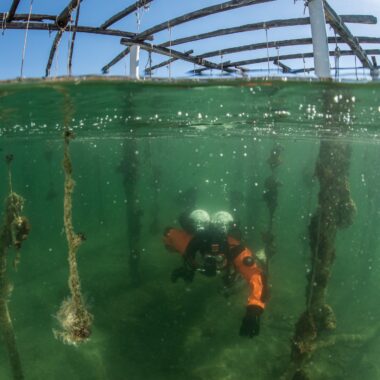
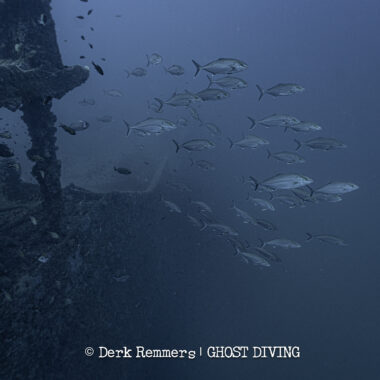
Marine litter creates another layer of pressure. Abandoned fishing nets can continue trapping animals while gradually accumulating debris and marine growth. When they settle over Posidonia, they can act like a blanket, blocking the light the plant needs for photosynthesis. Materials left behind by abandoned aquaculture facilities can similarly cover the seabed and prevent already damaged habitats from recovering.
This connection is central to the work of Healthy Seas. Removing ghost nets and debris is not only about taking waste out of the water. It is about releasing the ecosystems beneath it from continuing pressure and creating the conditions in which natural recovery may begin.
The episode also explores how scientists map and monitor Posidonia meadows using sonar, satellites, drones, environmental DNA and direct observation underwater. Long-term monitoring is particularly important for such a slow-growing species: it can reveal changes in meadow extent, biodiversity and ecological condition before decline becomes irreversible.
Posidonia, microplastics and carbon
The completed episode will also examine how microplastics interact with Posidonia meadows and the role these ecosystems play in storing carbon.
Posidonia sediments can retain substantial carbon stocks accumulated over centuries or millennia. Protecting those existing stores is important, particularly because damage to a meadow may release carbon that has remained undisturbed for generations. However, Posidonia should not be presented as a rapid solution capable of compensating for current fossil-fuel emissions. Its exceptionally slow growth makes that claim scientifically misleading.
The stronger case for Posidonia conservation is broader: protecting biodiversity, stabilising sediments, maintaining water quality, supporting fisheries, defending coastlines and safeguarding carbon that is already stored. Carbon is part of its value but it is not the entire story.
There are reasons for hope. Dimitris shares examples in which reducing pressures, improving regulation and bringing stakeholders together have allowed meadows to begin recovering naturally. The essential first step is not promising a quick restoration. It is understanding where Posidonia exists, removing the forces damaging it and protecting what remains.
Listen to the episode to discover an ecosystem that shapes Mediterranean life from beneath the surface and why conserving it requires us to think not only about the next project or tourism season, but about the centuries ahead.