
Bivalves: The Ocean’s Living Filters
Part of our Ocean’s Natural Cleaning Crew series exploring the marine organisms that quietly help keep our seas healthy.
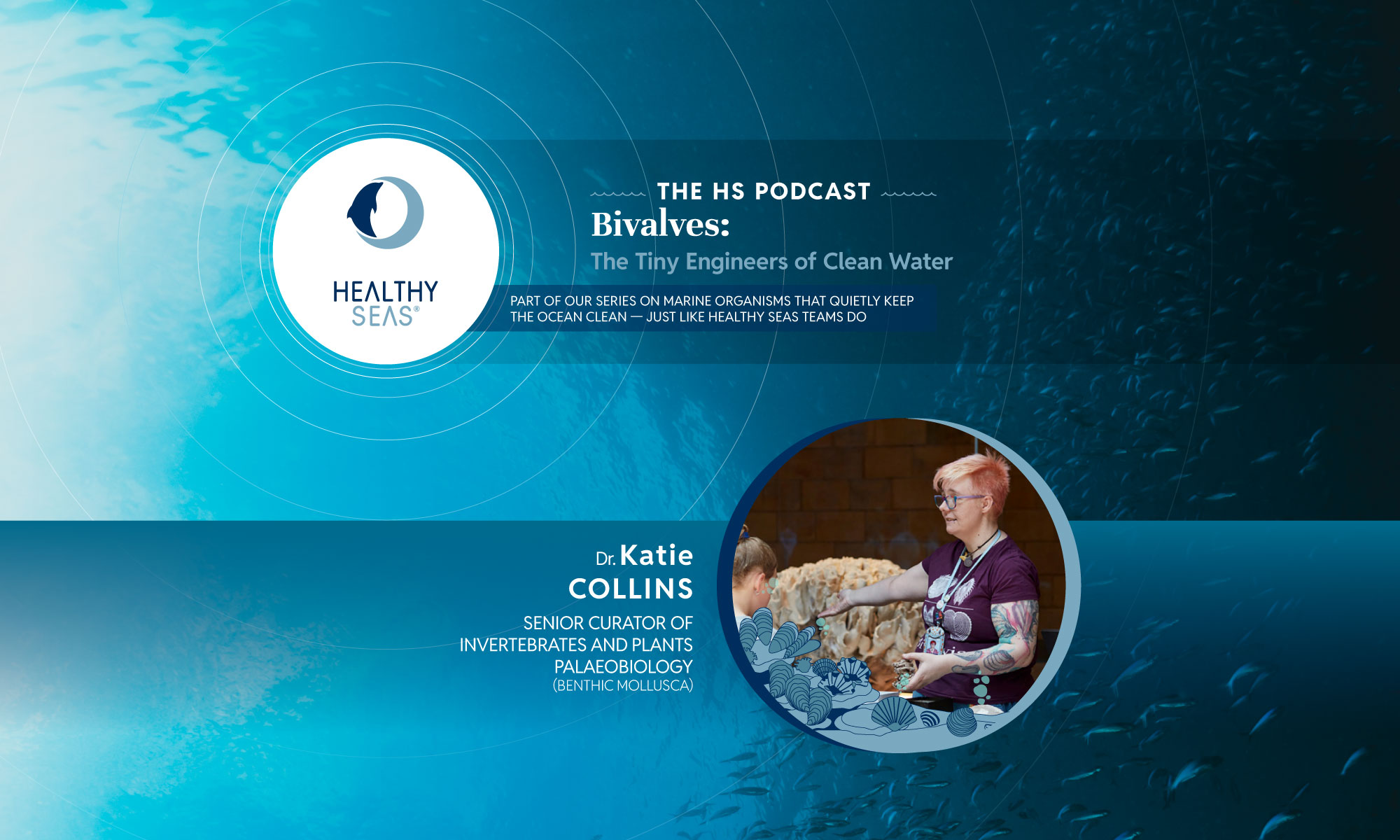
When we think about cleaning the ocean, we often imagine divers removing ghost nets or volunteers collecting plastic from the shore. But beneath the surface, nature has its own cleaning crew. In this episode of our Ocean’s Natural Cleaning Crew series, we explore one of the most familiar and yet most underestimated groups of marine animals: bivalves.
Oysters, mussels, clams, scallops and cockles may seem simple at first glance. They do not have a head. Many spend their lives fixed to rocks, buried in sediment, or attached to other surfaces. But these two-shelled animals are among the ocean’s most effective natural water filters.
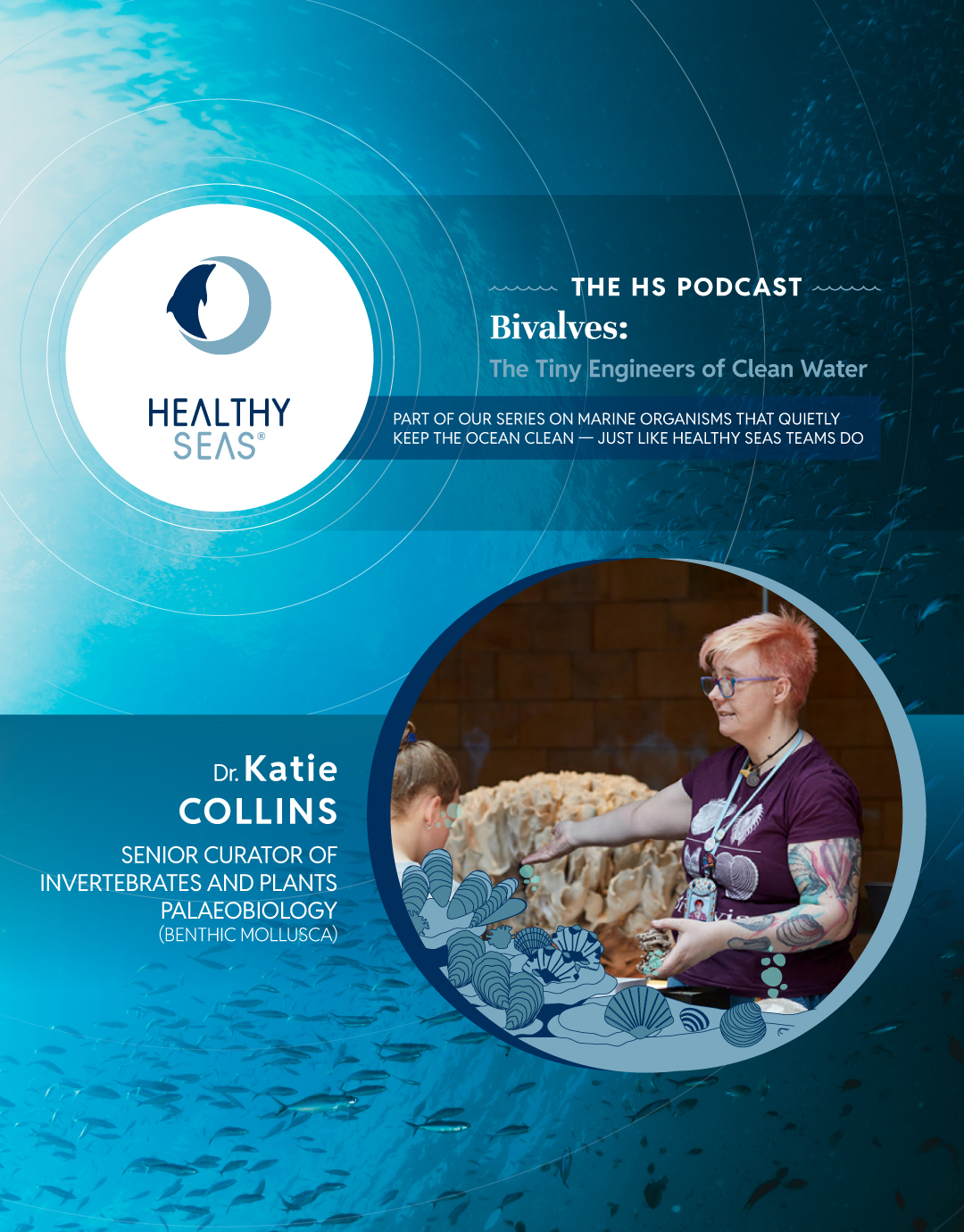
Joining us is Dr. Katie Collins, molluscan palaeobiologist and curator of fossil benthic molluscs at the Natural History Museum in London, who helps us understand why bivalves are far more extraordinary than they appear.
Living pumps beneath the surface
Bivalves are sometimes described as living pumps. Most species feed by drawing water into their bodies, passing it over their gills, and removing tiny particles suspended in the water. This process allows them to capture food such as plankton and algae, but it also means they remove sediment, bacteria, and other particles from the water column. In doing so, bivalves can improve water clarity and help light reach underwater habitats where plants, algae and other organisms depend on it.
In the episode, Dr. Collins explains how specialized these animals are: much of their body is optimized around their gills, making them some of the most efficient filter feeders in the natural world.
Cleaner water, healthier ecosystems
The work of bivalves does not stop at filtration. Healthy populations of oysters and mussels can help reduce excess nutrients such as nitrogen, which often enters waterways through agricultural runoff and wastewater. Too much nitrogen can fuel algal blooms and reduce oxygen levels in the water, creating stressful conditions for marine life.
By filtering particles and influencing nutrient cycles, bivalves help maintain a healthier balance in coastal ecosystems. They also create habitat. Oyster reefs and mussel beds form complex structures where other species can find shelter, food, and places to reproduce. In this way, bivalves do not simply live in ecosystems, they help build them.
What happens when bivalves disappear?
Around the world, many historic oyster reefs and bivalve habitats have been heavily damaged or lost, often due to overharvesting and destructive collection methods. In many cases, these declines happened before scientists began measuring water quality, which means we do not always know exactly what was lost. But restoration projects are helping us understand what bivalves can bring back. When oyster reefs are restored, they can improve water clarity, support biodiversity, and rebuild some of the physical structure that many coastal species depend on. They may not recreate the past exactly, but they can help restore important ecological functions.
Ancient shells, future lessons
Dr. Collins also brings a fascinating perspective from palaeobiology. Bivalves have existed for more than 500 million years, and their shells fossilize exceptionally well. Because their shells record growth and shape over time, fossil bivalves can help scientists understand how marine life responded to past climate changes, shifting oceans, and major ecological events. In other words, bivalves are not only cleaners of today’s seas. They are also archives of ancient oceans, holding clues that may help us understand the future.
Small animals, big impact
Bivalves may not always receive the attention given to whales, turtles, or sharks. But their role in ocean health is profound. They filter water. They recycle nutrients. They create habitat. They support biodiversity. And, through their fossil record, they help us read the long history of life in the sea.
In this episode, we invite you to look again at these familiar shells and discover the hidden power of the animals inside them. Listen to the full episode to learn why bivalves are some of the ocean’s most important natural cleaners and why protecting and restoring them matters for healthier seas.