Our Andros, Our Ocean: from classroom learning to community action
Healthy Seas returned to Andros with an expanded programme combining school visits, teacher training and hands-on action along the coast.
In April 2026, Healthy Seas returned to Andros with a broader edition of Our Andros, Our Ocean, an educational programme focused on ocean literacy, marine litter and the relationship between island communities and the sea.
Building on the collaboration established on the island the previous year, this year’s programme expanded both in reach and in format, combining school activities, teacher engagement and community action.
Over five days, Healthy Seas visited 10 schools across Andros, reaching 589 students and 105 teachers from different age groups. Through age-appropriate activities, students explored marine pollution, the impact of marine litter and the role they can play in protecting the environment around them.
But the programme was designed to go beyond individual classroom visits. An additional online webinar for teachers gave educators the opportunity to explore ocean literacy and marine pollution in greater depth, ask questions and access knowledge they can continue using independently in their own classrooms. This element is particularly important to the long-term value of the programme. By supporting teachers directly, the learning does not have to end when a Healthy Seas visit is over. It can continue, evolve and reach new students over time.
From learning to action
The week also connected education with practical action. Following the school visits, one school independently organised a local beach cleanup, putting what students had learned into practice.
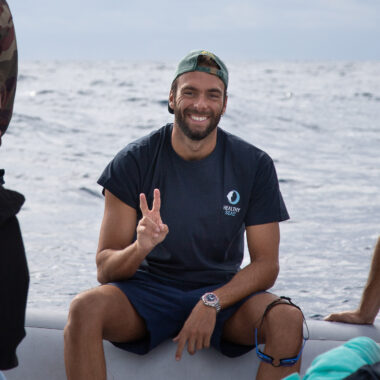
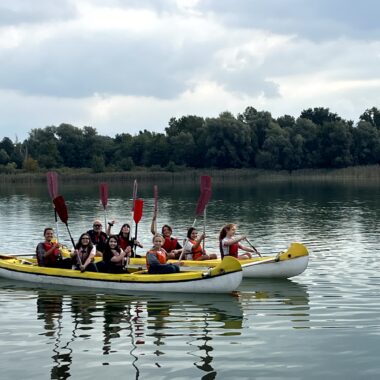
A wider community cleanup at Mylos Beach in Korthi then brought together local volunteer groups, families and community members. Organised in collaboration with Andros Challenge & Festival, the event involved 50 participants, including 20 children, who cleaned approximately 10,000 m² of coastline and removed around half a tonne of marine litter. Most of the waste consisted of small plastic fragments, ropes, plastic tubes, bottles and other debris that had accumulated along the shore.
Together, the different parts of the programme showed how ocean education can move beyond awareness alone: from the classroom, to teachers, to families and finally to direct action in the local environment. For Healthy Seas, the ambition is not simply to deliver one-off activities, but to help create the conditions for ocean literacy and local stewardship to continue growing within communities themselves.


![IMG_20260422_093822[1]](https://www.healthyseas.org/assets/uploads/IMG_20260422_0938221-380x380.jpg)