
More Than a Finish Line: Healthy Seas at UltraEbre
How endurance sport can strengthen our connection with the waters it depends on
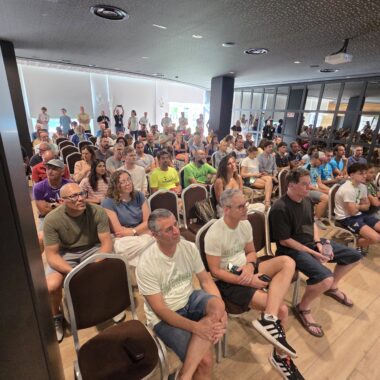
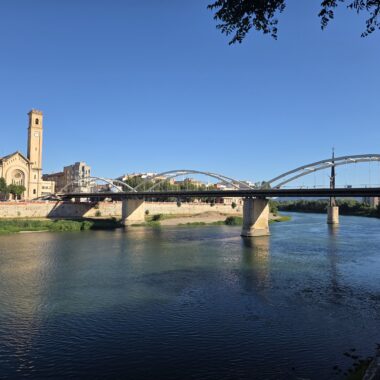
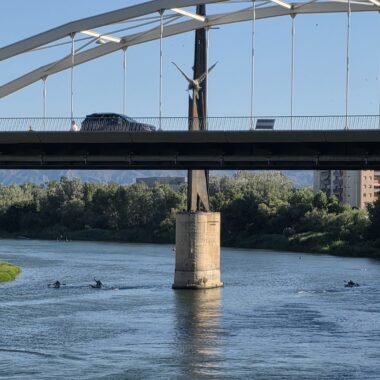
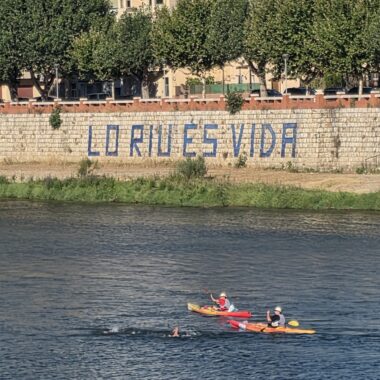
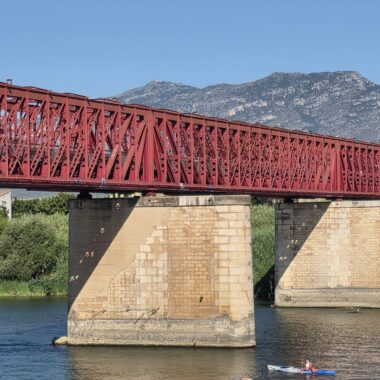
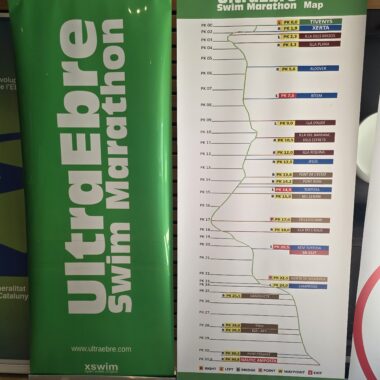
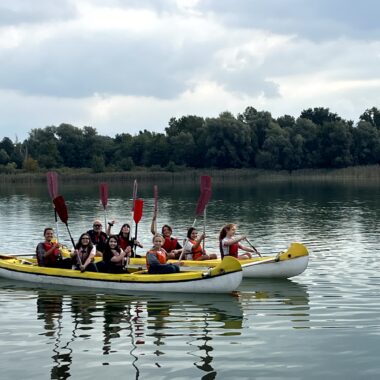
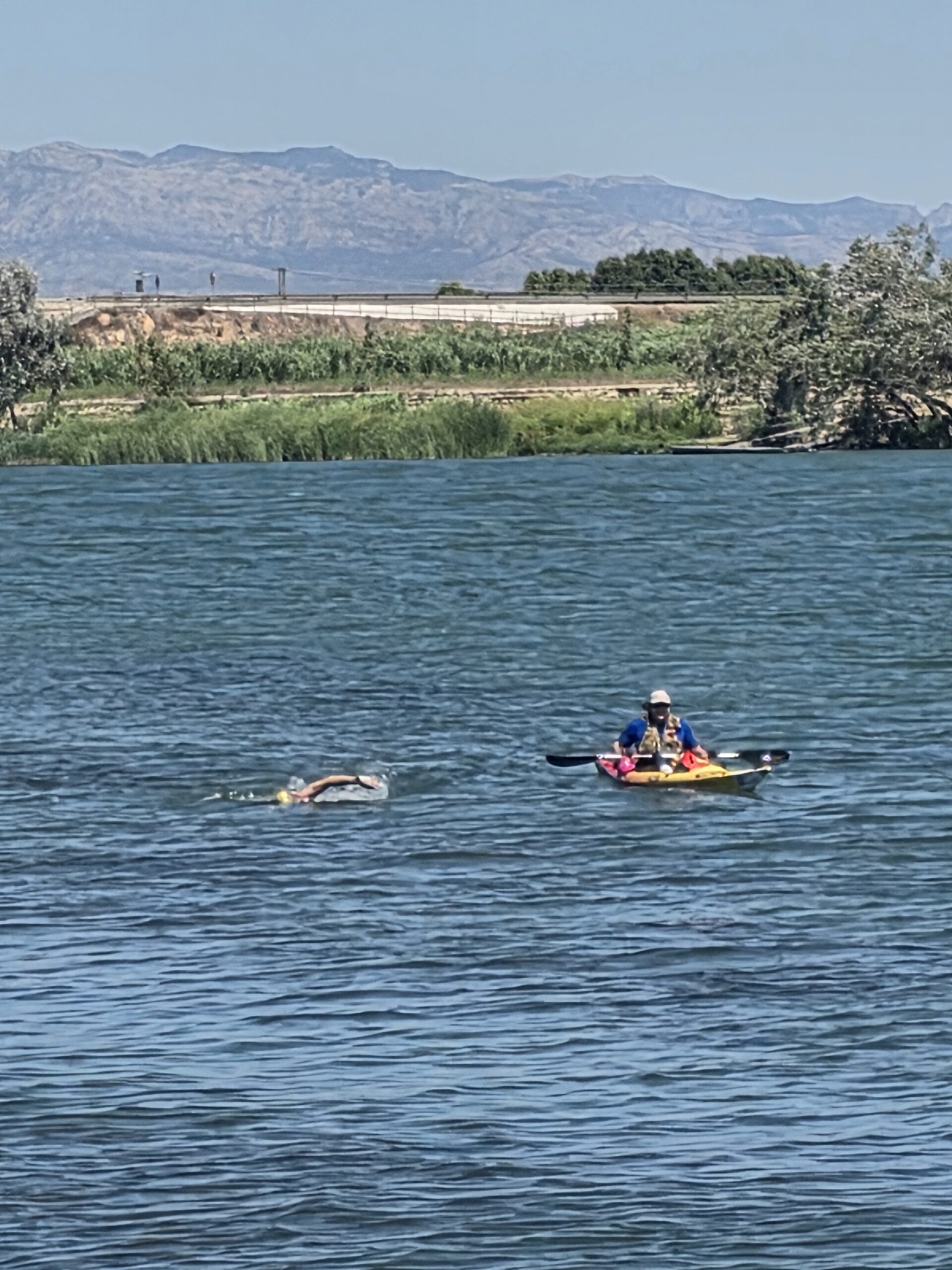
At 5:30 in the morning, swimmers, kayakers and organisers gathered beside the River Ebro to begin a 30.8-kilometre journey from Tivenys to Amposta. Before the start, UltraEbre director Luis Saura addressed the athletes with a simple phrase:
“Nedadors, lo riu es vostre”
Swimmers, the river is yours.
For one day, it was. But when a river becomes a sporting arena, it also raises a wider question: what responsibility do we have towards the natural environments that make sport possible?
In July 2026, Healthy Seas joined the UltraEbre Swim Marathon as Environmental Partner, bringing ocean and aquatic conservation into the experience of the athletes taking part.
When nature shapes the challenge
Open-water sport is inseparable from its surroundings. Unlike a swimming pool, a river is a living and changing environment. Currents, temperature, vegetation and weather all influence the race.
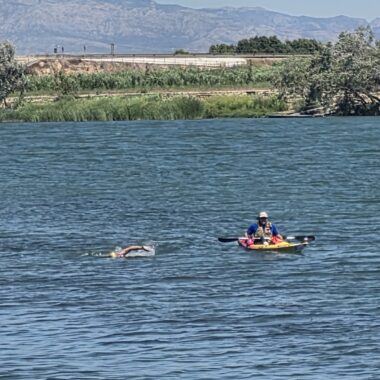
Kayaker Ana Fernández experienced this while supporting swimmer Marta Rubio. The first part of their journey was calm, but after kilometre 22, the current turned against them. Marta had already been swimming for hours, while Ana began to feel pain in her arm from paddling.
“We decided that we had to reach the finish,” Ana explained. “And we did.”
Reaching it was not an individual achievement. Ana carried Marta’s water and energy gels, monitored her condition and adapted to what she needed throughout the race.
That relationship between swimmer and kayaker reflects something essential in both sport and conservation: difficult challenges require trust, resilience and teamwork.
A personal connection with the river
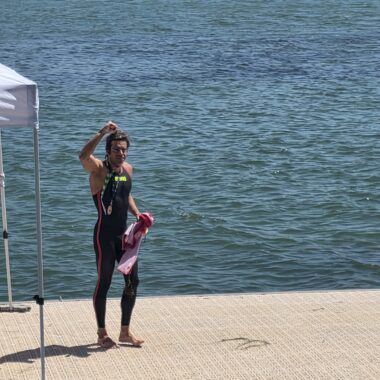
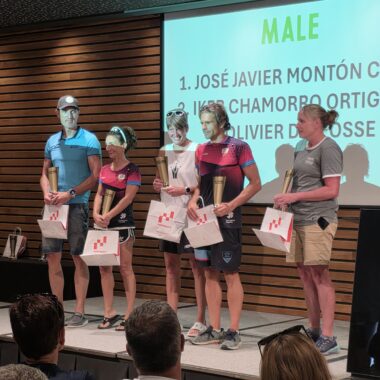
This year’s winner, José Javier “Monty” Montón, completed his third UltraEbre victory and his ninth participation in the event. For him, swimming is more than competition.
“My life is water and swimming,” he told us.
Monty described the Ebro as a privileged environment, connected to his home, friendships and years of personal experience.
This sense of belonging matters. People are more likely to care for places they know and value. For swimmers, kayakers, sailors and surfers, the water is not simply a background. It shapes their sport, their memories and often their identity. When these environments become polluted, degraded or unsafe, sport loses something too.
Caring for the environment behind the event
UltraEbre has been bringing swimmers to the River Ebro since 2011. During that time, Luis Saura has seen increasing involvement from organisations working to improve water quality, support biodiversity and restore the river ecosystem.
He also recognises that sporting events themselves have an impact. They require transport, food, hydration, equipment and logistics, all of which can generate waste. Rather than claiming to be impact-free, the organisers work to reduce consumption and waste where possible and collaborate with local actors already caring for the river.
This is an important lesson for sport more broadly: environmental responsibility does not begin with perfection. It begins with recognising impacts and taking practical steps to reduce them.
Bringing conservation into the athlete experience
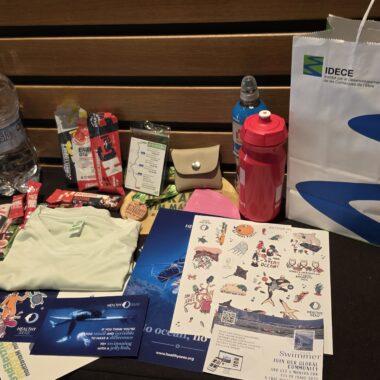
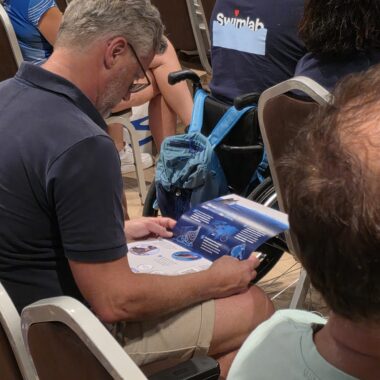
Healthy Seas’ first activation at UltraEbre focused on awareness and education. Participants received materials introducing our work, illustrated postcards, stickers and an activity inviting children to imagine their own “ocean hero”.
A race pack cannot solve marine pollution. But it can create a moment of connection. Athletes return home to clubs, families, schools, workplaces and online communities. The ideas they encounter at an event can travel with them.
Sport can reach audiences that conservation organisations do not always engage through traditional environmental communication. The opportunity is not simply to place an environmental message next to a sporting event, but to show why that message naturally belongs there.
From endurance to environmental action
Sport is already being affected by environmental change. Extreme heat, polluted waters, drought, fires and unpredictable weather increasingly influence where and how competitions can take place. At the same time, sport can help respond.
Athletes understand perseverance, adaptation and long-term commitment. Teams understand cooperation. These are also essential qualities for environmental action, where progress is rarely immediate or linear.
At Healthy Seas, we have seen this potential through collaborations with arena, DWS and the Los Angeles Lakers, Bracenet and SV Werder Bremen, as well as athletes who have joined cleanups and educational activities. UltraEbre is another example of what can happen when sport and conservation meet around a shared environment.
Join us in connecting sport with ocean conservation
Healthy Seas works with athletes, clubs, events, federations and brands that want to turn their influence and resources into meaningful action for the ocean. Collaborations can include cleanups, education, athlete and employee engagement, fundraising, storytelling or circular innovation.
If your organisation is exploring how sport can contribute to healthier seas and aquatic environments, we would be pleased to start a conversation. Because in a changing ocean, pushing limits is no longer just about performance, but about protection.