
Sport and Ocean Conservation: Impacts, Challenges and New Opportunities
How sport is shaping and being shaped by the environmental crisis
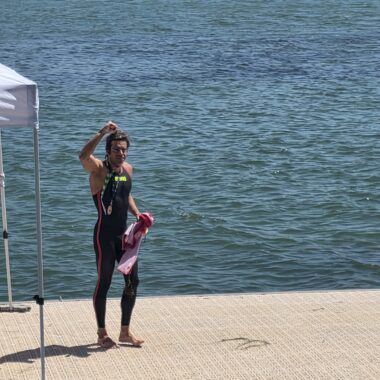
On a summer day, an athlete dives into open water. The surface looks calm, the performance precise, the moment almost timeless.But beneath that surface: warming currents, shifting ecosystems, pollution, there is a different story unfolding.
Sport has always depended on nature. Today, that relationship is becoming harder to ignore. From overheated stadiums to disappearing coastlines, from polluted rivers to powerful athlete activism, the intersection between sport and the environment is no longer peripheral—it is structural. Even mainstream media, such as The Guardian, has recently launched a dedicated newsletter exploring exactly this connection, a sign that the conversation has reached a new level of urgency.
This is not just about performance. It is about possibility.
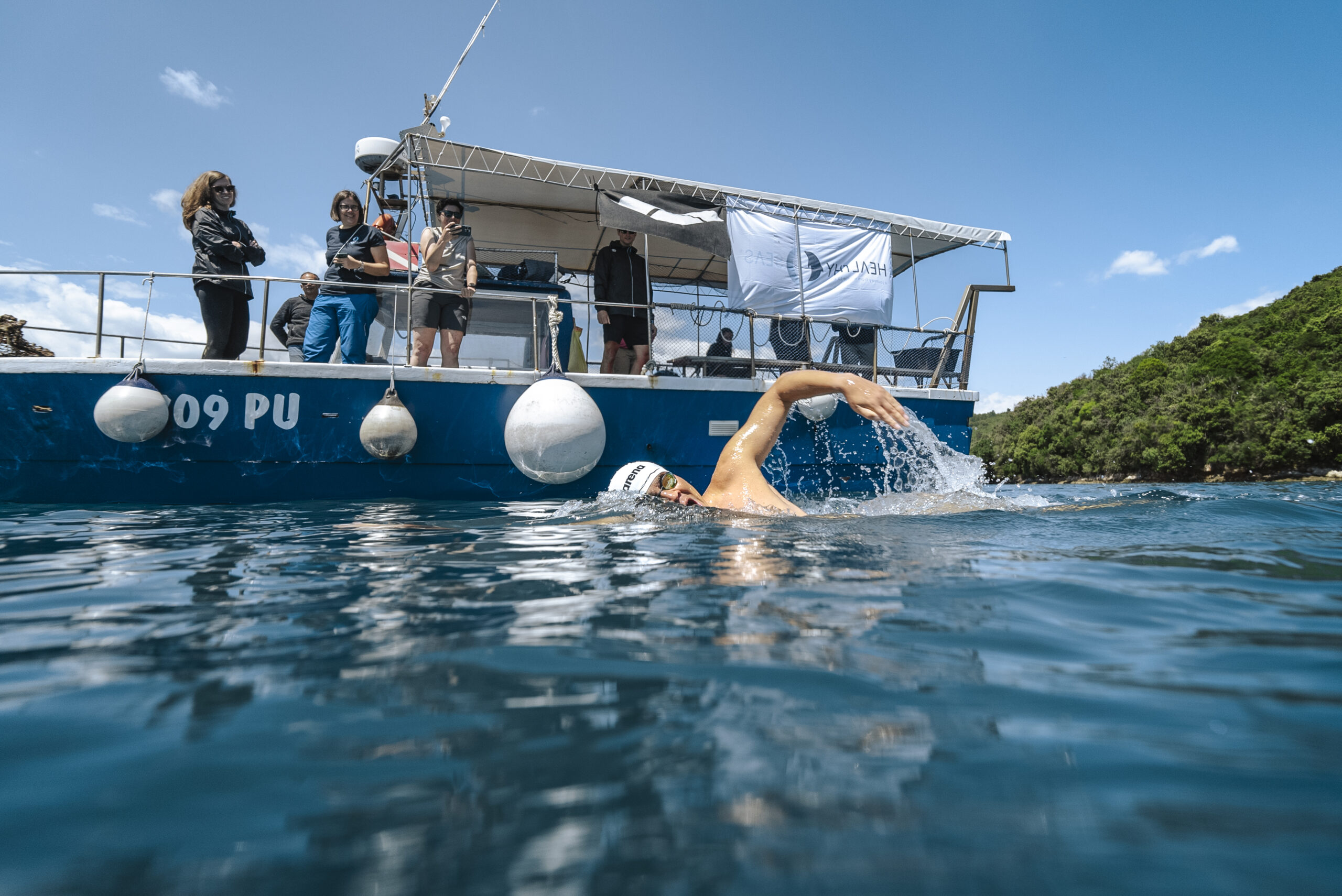
Andy Donaldson in Croatia in 2025 with Healthy Seas and Arena during a clean up mission.
When the environment shapes the athlete
Heatwaves are no longer an occasional challenge, they are becoming the norm. From tennis courts to marathon routes, athletes are increasingly competing in extreme temperatures, with real consequences for performance and health. Endurance sports, in particular, are seeing shifts in training, scheduling, and even physiology as bodies are pushed beyond historical limits. This is not a distant risk. It is already redefining what it means to perform.
When the playing field disappears
Some sports are facing a more existential question: what happens when the environment itself is no longer usable? The planned swimming events in the Seine during the Paris 2024 Summer Olympics sparked global debate about water quality and pollution. Despite major investments, the challenge highlighted a broader truth: natural environments cannot be “managed” indefinitely without addressing their underlying degradation.
Winter sports face an even starker reality. With rising temperatures, reliable snow is becoming scarce, forcing the Winter Olympics to rely increasingly on artificial snow, an energy and water intensive solution that raises further environmental concerns.
For some disciplines, climate change is not just a disruption. It is an existential threat.
The hidden footprint of sport
Sport does not only depend on the environment, it also reshapes it. From stadium construction to global travel, the environmental footprint of sports infrastructure and events is significant. Mega-events require vast resources, often leaving behind underused venues or long-term ecological impacts.
Even at smaller scales, the materials used, the energy consumed, and the logistics involved all contribute to a footprint that is rarely visible to spectators. The question is no longer whether sport has an impact, but how that impact can be reduced.
When nature fights back
Unpredictable weather is already rewriting the rules of sport. Wildfires have disrupted tournaments. Droughts have affected golf courses and rowing events. Storms have forced cancellations and rescheduling across disciplines. These are not isolated incidents, they are part of a pattern. Sport, often seen as controlled and predictable, is becoming increasingly exposed to forces beyond its control.
From influence to inspiration
And yet, sport also holds something uniquely powerful: attention. Athletes can reach audiences that traditional environmental communication often struggles to engage. Their voices travel further, faster, and with a different kind of credibility. Footballer Beth Mead, for example, has spoken openly about the impact of climate change on football, helping bring the issue into mainstream sports discourse.
At Healthy Seas, we have seen this potential firsthand through our partnership with Arena. Elite athletes have joined our missions, not only to remove marine litter from the ocean, but also to engage with students, share stories, and translate complex environmental issues into human experiences. Because sometimes, a message travels further when it comes from someone you already admire.
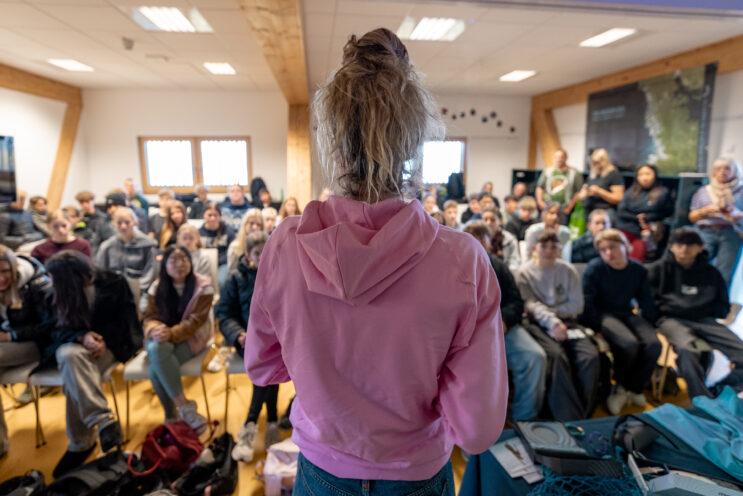
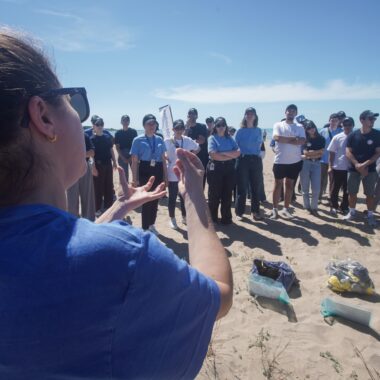
Leoni Back in Germany in a school with Healthy Seas and Arena. Ph.credit: Courtesy of arena
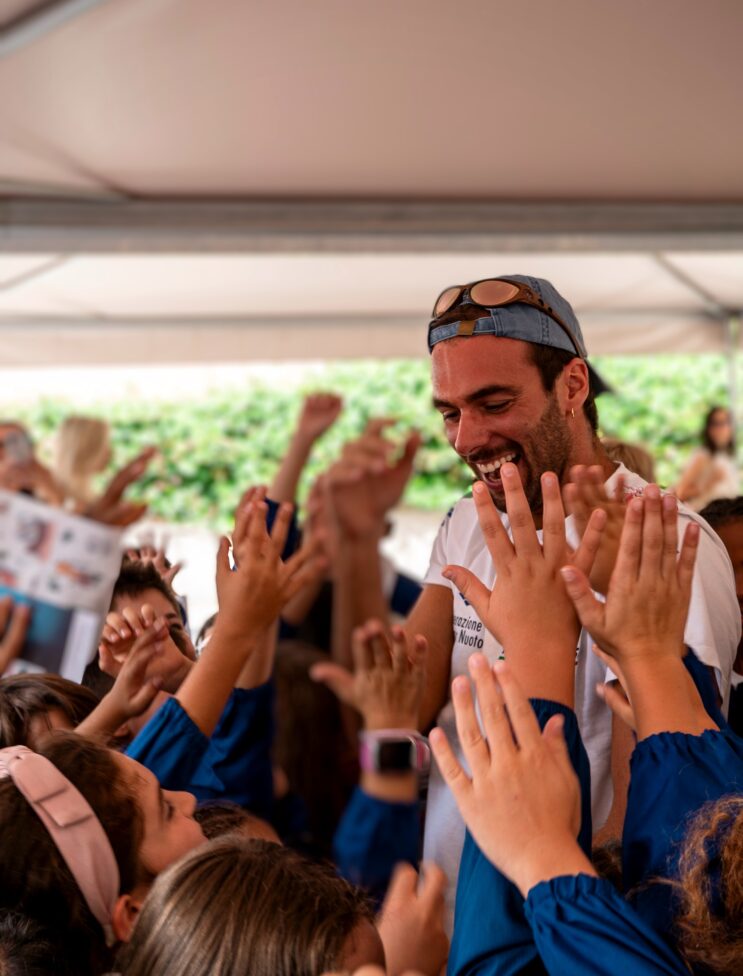
Gregorio Paltrinieri in a school in Italy with Healthy Seas and Arena. Ph. Credit: Gianluca Prosperi
What sport can teach environmental action
Beyond visibility and influence, sport also builds something less visible but equally important. Resilience. Discipline. The ability to adapt under pressure. The experience of working as a team toward a shared goal. These are not just qualities of high-level athletes. They are also the foundations of effective environmental action.
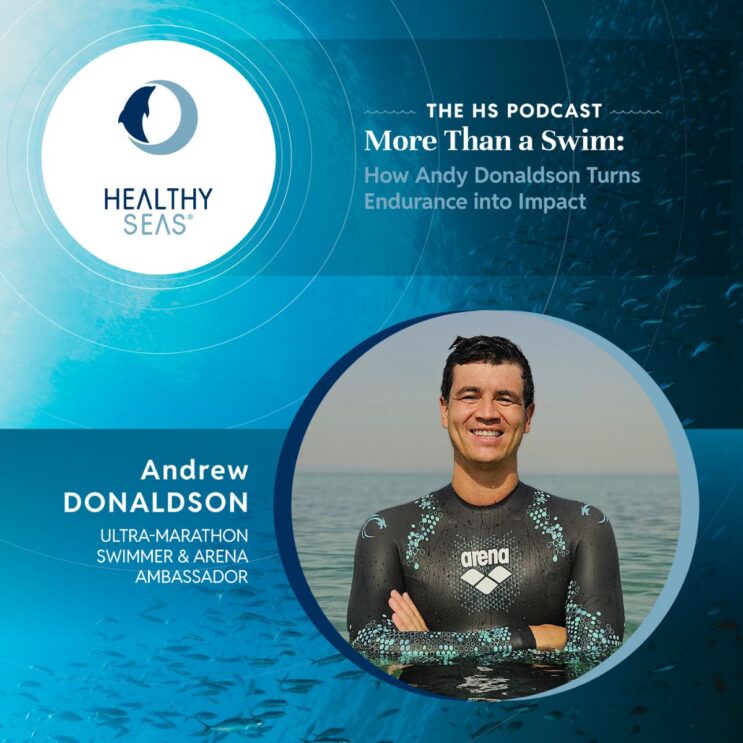
In our conversations with open water swimmer Andy Donaldson, this connection becomes clear. Facing unpredictable conditions, cold waters, and physical limits requires not only strength, but the ability to stay present, adjust, and keep going. The same is true for those working to protect the ocean.
Environmental challenges are complex, often slow-moving, and rarely linear. Progress requires persistence, collaboration, and the willingness to continue even when results are not immediately visible. In this sense, sport does not only inspire action, it prepares people for it.
From awareness to action
Beyond influence, sport can also mobilize resources. Partnerships, fundraising initiatives, and brand collaborations linked to sport can generate tangible support for conservation efforts. This is not just about visibility, it is about enabling action.
We have explored this connection in different ways. Together with Bracenet and SV Werder Bremen, discarded fishing nets were transformed into a functional football goal net, turning waste into a symbol of play. In Los Angeles, collaborations with Los Angeles Lakers and DWS brought ocean conservation into one of the world’s most visible sports ecosystems, engaging audiences far beyond the traditional environmental sphere.
These are small shifts, but they point to a larger possibility.
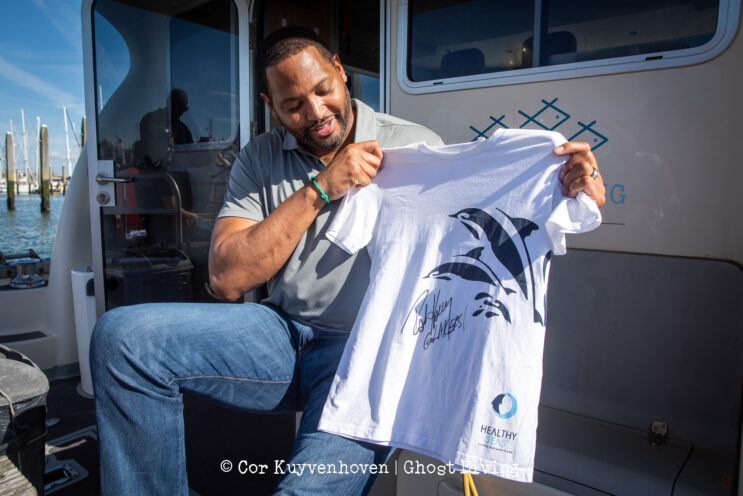
7-time NBA champion, Robert Horry, aka Big Shot Rob with the Healthy Seas team during a clean up mission.
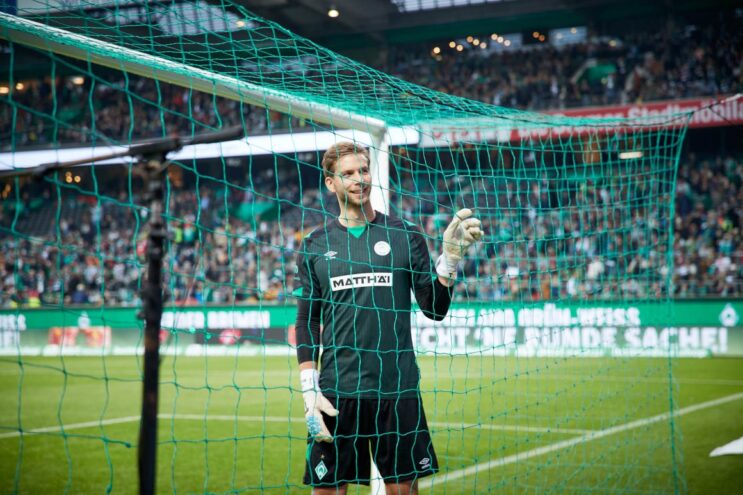
September 24th, SV Werder Bremen’s farewell match of Claudio Pizarro and first nets from fishing nets.
Designing the future of sport
There are signs of change. From more sustainable venues to reduced travel footprints and innovative materials, parts of the sports industry are beginning to rethink their impact. Some leagues, including initiatives within the NBA, are exploring ways to reduce emissions and integrate sustainability into operations. But progress remains uneven and often slower than the scale of the challenge requires.
The ocean as a shared playing field
For ocean-based sports, the connection is even more direct. Swimming, sailing, surfing, these disciplines depend on clean, healthy waters. When pollution increases, when ecosystems degrade, when marine life disappears, the experience of these sports changes as well.
This is where conservation becomes tangible. Through cleanups initiatives and educational programs, the Healthy Seas Foundation works at the intersection of ocean protection and public engagement often alongside athletes who bring these stories to life.
Events like open water challenges, including those involving Olympic champion Gregorio Paltrinieri (Dominate the Water), show how sport can reconnect people with the ocean, not as a backdrop, but as a living system.
A relationship being rewritten
Sport and nature were never separate. But for a long time, it was possible to act as if they were. That illusion is fading.
Today, sport is becoming a mirror of the environmental crisis, revealing its impacts, amplifying its stories, and, potentially, helping to reshape its future. And the question is no longer whether sport will be affected, it is whether it will choose to be part of the solution.
An invitation to the world of sport
Sport has always been about pushing limits. Today, one of those limits is environmental.
At Healthy Seas, we work with athletes, teams, brands, and organizations who want to be part of a different kind of performance, one that goes beyond results and contributes to protecting the environments sport depends on. This can take many forms: from hands-on cleanups and education programs, to employee engagement, storytelling, and material innovation. What matters is not the format, but the intention to act.
If you are part of the sports world: an athlete, a federation, a brand, or an event organizer and you are asking how your work can connect more meaningfully with ocean conservation, we are always open to exploring new collaborations. Because in a changing ocean, pushing limits is no longer just about performance, but about protection.
Dive deeper
Explore our ocean missions in action
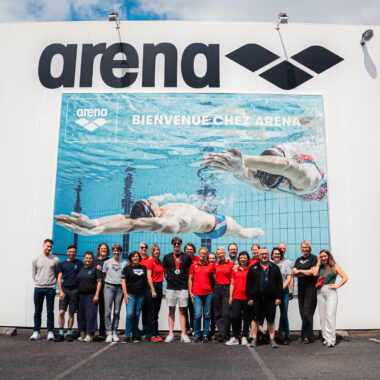
The Ocean Starts Here: World Ocean Day with arena and Alex Portal in Libourne
On World Ocean Day, the ocean did not look like a distant horizon. It looked like the banks of the Dordogne River in Libourne, France, where a group of people gathered to stop litter before it could travel any further. On 8 June, Healthy Seas joined arena at its French office in Libourne for a […]

More Than a Swim: How Andy Donaldson Turns Endurance into Impact
One Stroke at a Time: A Journey of Purpose and Resilience In our first episode after a long pause, the Healthy Seas Podcast dives back in with a guest who embodies everything we stand for—passion, action, and deep connection to the sea. Andy Donaldson is not just the first person to complete the Ocean’s Seven […]

Salt in the Air, Nets in Our Hands: Kicking Off a New Chapter with Arena and Andy Donaldson
The sea was calm but quite cold. The air smelled of salt and early summer. And below the surface, ghost nets waited. On May 24, the Healthy Seas team returned to Rasa Fjord—an ecologically significant area on the Istrian coast of Croatia—with a new partner onboard: Andy Donaldson, record-breaking ultra-swimmer and sustainability ambassador for Arena, […]
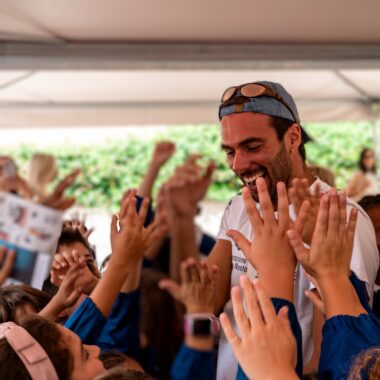
Inspiring the Next Generation: Gregorio Paltrinieri Meets Students in Tolentino, Italy
On 17 September, Olympic champion and Healthy Seas ambassador Gregorio Paltrinieri met more than 200 students at the Istituto Comprensivo G. Lucatelli in Tolentino, thanks to arena and the Healthy Seas Foundation. Additional classes joined online, turning the school into a vibrant arena of curiosity, laughter, and important conversations about sport and the ocean. The […]

Arena and Olympic Champion Gregorio Paltrinieri Join Forces with Healthy Seas for Ghost Net Cleanup in Sicily
Arena and Olympic Champion Gregorio Paltrinieri Join Forces with Healthy Seas for Ghost Net Cleanup in Sicily We’re thrilled to announce the success of our recent ghost net cleanup in Sicily, where Olympic champion Gregorio Paltrinieri joined Arena and Healthy Seas for a two-day mission to protect the ocean! This mission took place near Syracuse, […]
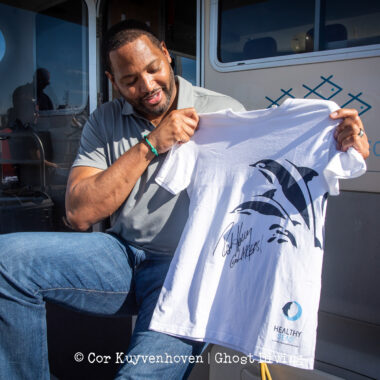
LA Lakers Legend, Robert Horry, joined us in IJmuiden
On August 2nd, we welcomed representatives of our partner DWS onboard our ghost net recovery vessel, the MAKO. With them, they brought a very special guest: 7-time NBA champion, Robert Horry, aka Big Shot Rob! It was a great opportunity to exchange stories and to get him inspired about ocean conservation, which will hopefully lead to some […]
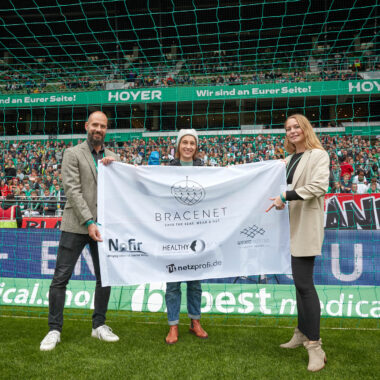
They used to catch fish, now they catch balls, with SV Werder Bremen and BRACENET
On September 24th, SV Werder Bremen’s farewell match of Claudio Pizarro was at the same time a premiere: the world’s first goal nets made of former fishing nets completed their first match day. These “fishers’ goal nets” were the result of a cooperation with BRACENET, together with whom we have been fighting for cleaner seas for […]
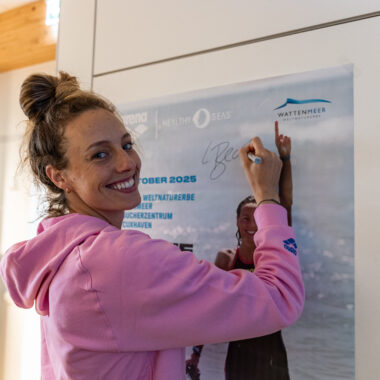
Leonie Beck, Arena, and Healthy Seas Unite for Ocean Protection in Cuxhaven
In a memorable day at the Wattenmeer Besucherzentrum in Cuxhaven sport, education and ocean protection came together. Arena and the Healthy Seas Foundation welcomed Olympic swimmer and double World Champion Leonie Beck. This event marked the third joint mission of 2025 in Europe, with only the final USA mission remaining in the year-long collaboration to […]