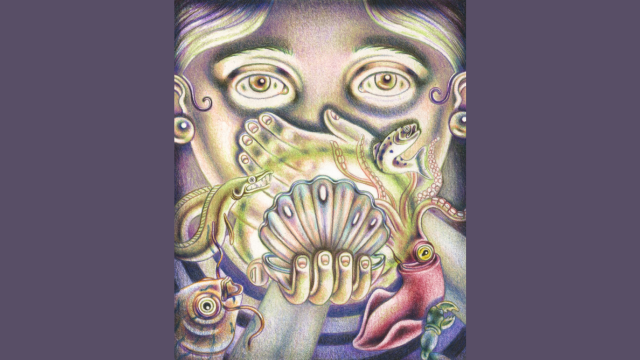

The Sense of Wonder: Why Awe Might Be Our Most Powerful Tool for Ocean Conservation
There is something strangely difficult about caring for what we cannot feel. We can explain ocean degradation with data, maps, and statistics. We can measure biodiversity loss, track ghost nets, and calculate the impact of pollution. But numbers alone rarely move people to act. Something else is needed, something less precise, but far more powerful.
A sense of wonder.
Long before “awe” became a topic of scientific research and educational strategy, Rachel Carson was already writing about it as a necessity. Best known for Silent Spring, Carson considered another, smaller book to be her most important: The Sense of Wonder. Written as a reflection on her time exploring nature with her grandnephew, it is less a guide to learning and more an invitation to feel. She believed that before we try to teach, we should learn how to see again.
Learning to feel before we learn to know
Carson’s message is disarmingly simple: the goal is not to transmit knowledge, but to awaken curiosity. She invites us to explore the world not as experts, but as beginners. To walk along a beach in the rain and darkness. To look closely at lichens and imagine them as something out of a fairy tale. To ask questions that have no immediate answer:
What if I had never seen this before?
What if I knew I would never see it again?
In these small shifts of perspective, something changes. Attention deepens. The ordinary becomes unfamiliar again. And this, Carson suggests, is where learning truly begins.
“It is not half so important to know as to feel,” she writes.
“If facts are the seeds that later produce knowledge and wisdom, then the emotions and the impressions of the senses are the fertile soil in which the seeds must grow.”
Awe: the science behind the feeling
Today, science is catching up with what Carson intuitively understood.
In Awe: The New Science of Everyday Wonder and How It Can Transform Your Life, psychologist Dacher Keltner defines awe as the emotion we feel when we encounter something vast, something that challenges our understanding of the world.
Awe is not just a pleasant feeling. It changes how we think and behave.It makes us more open. More collaborative. More willing to look beyond ourselves. It helps us see patterns, connections, and systems, exactly the kind of thinking needed to understand environmental challenges. And perhaps most importantly, it reminds us that we are part of something larger.
Few places on Earth evoke this feeling more powerfully than the ocean.
The ocean: a perfect place for awe
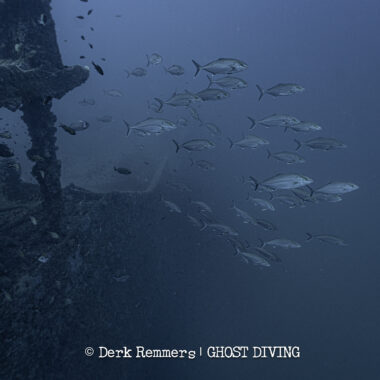
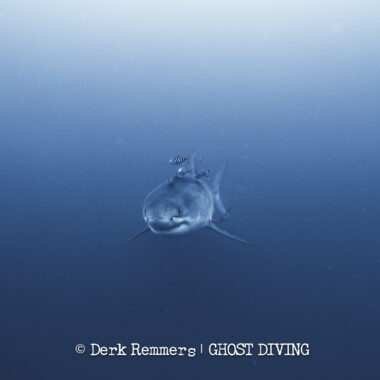
The ocean is, by definition, vast and mysterious. We have explored only a fraction of it. Entire ecosystems remain unknown. Life forms continue to surprise us. From plankton drifting invisibly through the water column to seahorses anchoring themselves to seagrass, from silent shipwrecks slowly becoming reefs to sharks moving through open water, these are not just scientific subjects. They are encounters with the unknown, and it is in these encounters that awe emerges.
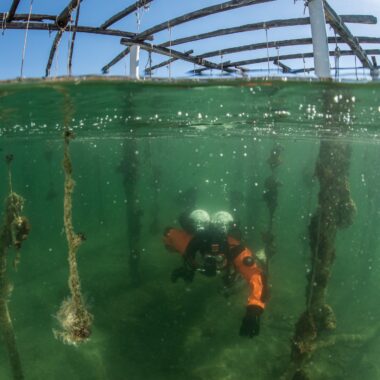
At Healthy Seas, this is something we witness constantly. Not only during our diving missions, but in the reactions of people who see these environments for the first time, sometimes through a screen, sometimes in person.
Bringing awe into the classroom (and beyond)
For many people, the ocean is far away—geographically and emotionally. This is where education must do something more than explain. It must recreate the experience. Through immersive tools such as virtual reality, underwater imagery from shipwrecks, and hands-on activities, we aim to bring the ocean closer. Not just as a concept, but as a presence.
In our educational programs, awe is not an added layer, it is the starting point. Students explore marine life not only through facts, but through observation, imagination, and sensory experiences. They are invited to think like scientists, but also to feel like explorers or to invent stories.
Sometimes this happens through simple exercises:
- observing small details through a magnifying glass
- imagining ecosystems from the perspective of different species
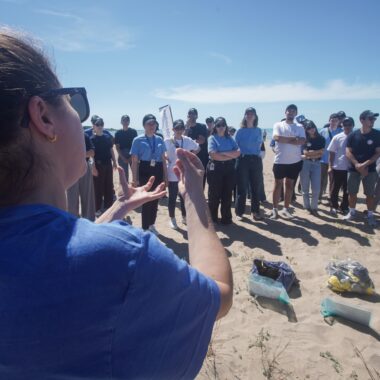
- experiencing nature directly through outdoor education
- asking questions without immediate answers
These approaches may seem small, but they build something essential: a personal connection. And without connection, conservation remains abstract.
Walking, thinking, and reconnecting
This idea is echoed in Wanderlust: A History of Walking by Rebecca Solnit, where walking is described not just as movement, but as a way of thinking. To walk is to slow down. To notice. To let the world enter our thoughts.
In a time when attention is fragmented and environments are increasingly mediated through screens, this kind of presence becomes rare and valuable. Reconnecting with nature, even in small ways, is not just an educational tool. It is a cultural shift.
Awe as a response to climate anxiety
There is another reason why awe matters today. For many young people and increasingly for adults environmental awareness comes with a sense of anxiety, even helplessness. The scale of the problems can feel overwhelming. Awe offers a different entry point.
It does not deny the challenges, but it changes the emotional landscape. It introduces curiosity where there might be fear. It creates space for reflection instead of paralysis. As Carson wrote, “those who contemplate the beauty of the earth find reserves of strength that will endure as long as life lasts.” In this sense, awe is not just inspiring. It is sustaining and healing.
From wonder to responsibility
A sense of wonder, on its own, is not enough to protect the ocean. But without it, protection becomes fragile. Because we do not protect what we do not feel connected to.
If we want future generations to care about marine ecosystems, biodiversity, and the hidden impacts of pollution, we need to go beyond information. We need to create experiences that stay with them, moments of discovery, curiosity, and surprise. Moments that feel personal.
At Healthy Seas, this is the direction we are continuing to explore: how to bring the ocean closer, not only through knowledge, but through emotion. Because sometimes, the most powerful starting point for change is not understanding. It is wonder.
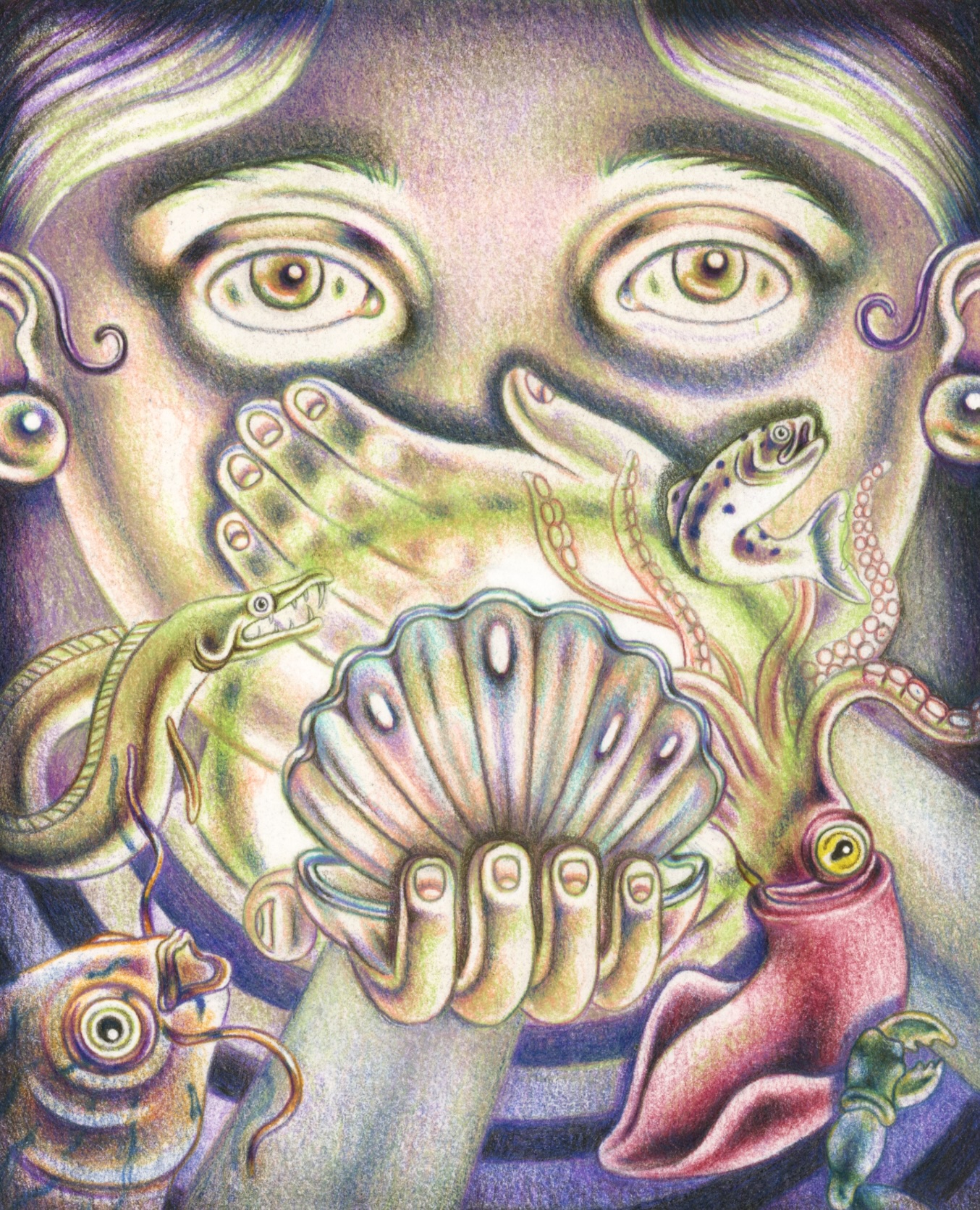
Relearning Wonder
Small invitations from Rachel Carson to see the world again
- Walk the shoreline in rain or darkness—let the unfamiliar lead
- Look closely at the smallest things—lichens, grains, textures
- Imagine the world from another being’s eyes
- Ask: What if I had never seen this before?
- Or: What if this were the last time?
- Let curiosity replace the need to explain
- Grow something slowly, and observe its quiet changes (seed)
- Follow the wind, the sky, the shifting light
- Use all your senses—not just sight