
Sea Cucumbers: The Ocean’s Unsung Recyclers
Part of our Ocean’s Natural Cleaning Crew series exploring the marine organisms that quietly help keep our seas healthy
When we think about cleaning the ocean, we often imagine divers removing ghost nets or volunteers collecting plastic from the shore. But beneath the surface, nature has its own recycling systems.
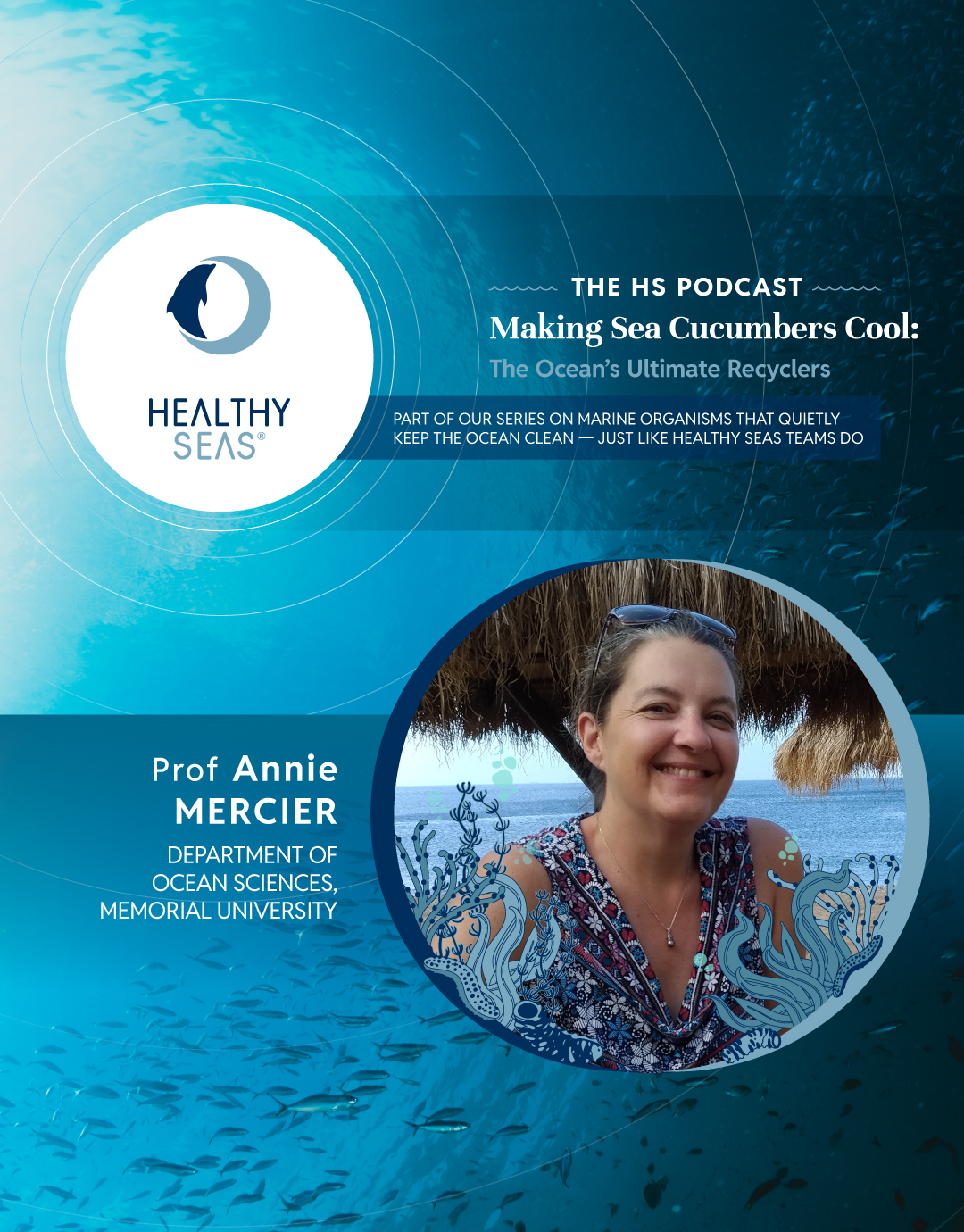
In this episode of our Ocean’s Natural Cleaning Crew series, we turn to one of the most overlooked and most underestimated marine animals: the sea cucumber.
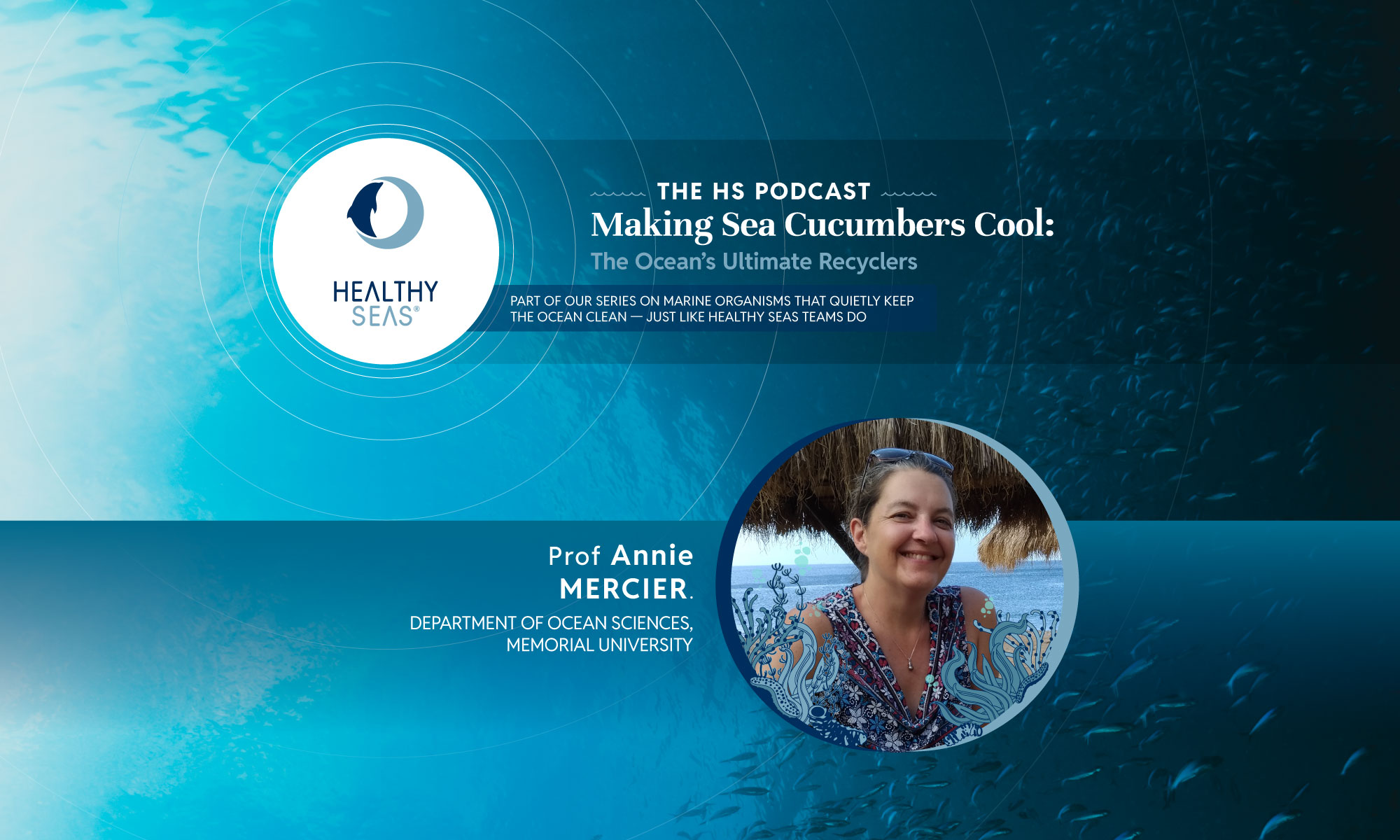
Joining us is Prof Annie Mercier, Department of Ocean Sciences, Memorial University (Canada), who has spent decades studying these remarkable creatures and co-edited the comprehensive scientific volume The World of Sea Cucumbers.
The “earthworms” of the ocean
Sea cucumbers are often compared to earthworms — and for good reason. Many species live on or within the seabed, ingesting sediment as they move. As they process sand and mud, they extract organic matter and bacteria, aerate the sediment, and recycle nutrients back into the ecosystem. In doing so, they help prevent the seafloor from becoming oxygen-depleted and support the balance between water column and seabed. On coral reefs, their role may be even more critical. Some studies suggest that by reducing bacterial loads, sea cucumbers can indirectly support coral health. Remove them, and the consequences may ripple outward through the ecosystem.
They are, in many ways, quiet engineers of resilience.
A world of diversity
One of the most striking insights from our conversation is just how diverse sea cucumbers are. There are hundreds of species and many more that remain understudied. They range from a few millimeters to over a meter long. Some bury themselves in sediment; others anchor to hard surfaces and feed from the water column. They inhabit tropical reefs, Arctic waters, and even the deepest ocean trenches. Understanding their ecological roles requires resisting the temptation to treat “sea cucumber” as a single, uniform category. Their diversity means their impacts — and vulnerabilities — differ from place to place.
Regeneration, longevity, and hidden potential
Beyond their ecological importance, sea cucumbers hold scientific fascination for another reason: their biology. They can regenerate internal organs. Some species can split in two and survive. Certain cold-water species may live for decades — perhaps even longer. Their mutable collagen, capable of rapidly shifting from rigid to pliable, is being studied for biomedical applications.
In evolutionary terms, they sit surprisingly close to us on the tree of life, making them valuable biological models for studying regeneration and aging.
A growing pressure
Despite their importance, many sea cucumber populations are under intense pressure due to overfishing driven by high commercial demand, particularly in Asian markets where they hold cultural and culinary value.
As more species enter global trade, scientists are racing to understand their life histories, reproductive cycles, and ecological roles before populations decline further. Their removal is not just a loss of a food source, it may also mean disrupting nutrient recycling, sediment oxygenation, and coral reef health.
Sea cucumbers may not be charismatic. They don’t have the expressive eyes of a dolphin or the majesty of a whale.
But as Prof. Mercier reminds us in this episode, we still underestimate them.
And if we want oceans that remain functional and resilient, we may need to start paying attention to the quiet recyclers working just beneath our feet.
Listen to the full episode to discover why sea cucumbers might be some of the ocean’s most important — and surprising — engineers.
📩 Subscribe to the Healthy Seas newsletter
💖 Discover how your organization can support marine protection and biodiversity with Healthy Seas
Further links to the topic:
- IUCN SSC Sea Cucumber specialist Group: https://iucn.org/our-union/commissions/group/iucn-ssc-sea-cucumber-specialist-group
- Prof. Annie Mercier lab’s website: https://www.mercier-lab.ca/
- The open-access conservation paper: https://doi.org/10.1146/annurev-marine-032123-025441
- Book https://www.sciencedirect.com/book/edited-volume/9780323953771/the-world-of-sea-cucumbers