Restoring Life Below Water
How Healthy Seas Supports Biodiversity Through Ocean Cleanups and Circularity
A Sea Floor Reborn
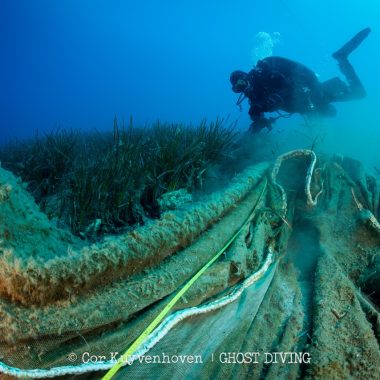
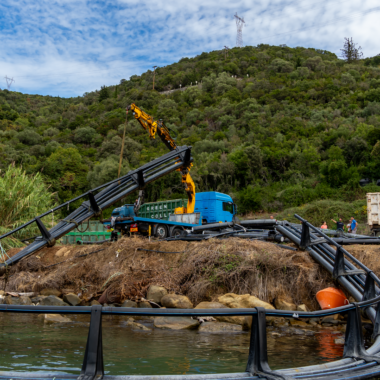
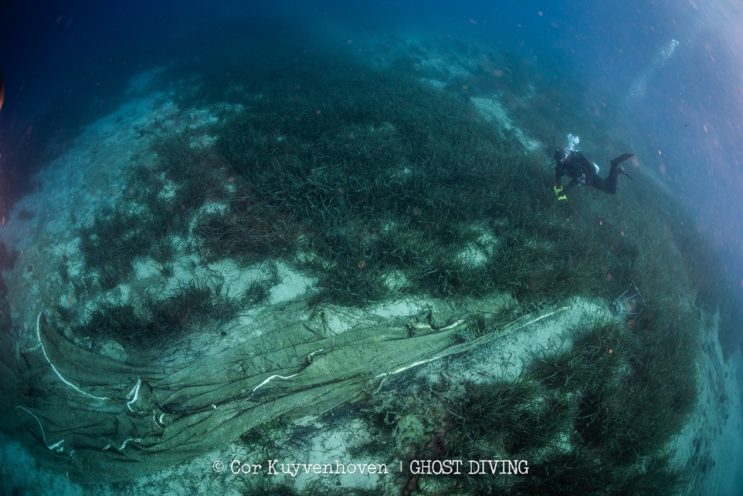
The first time we dove near the abandoned fish farm off Ithaca, the seabed was eerily quiet. Massive plastic rings, sunken like ghosts of past industry, lay cracked and heavy on the sea floor. Thick, tangled fishing nets choked the light from above, pressing down on what remained of the seagrass meadows — lifelines of the Mediterranean.
There was no movement. No shimmer of fish, no sway of marine plants — just a haunting stillness.
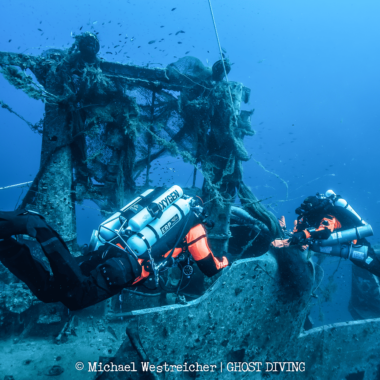
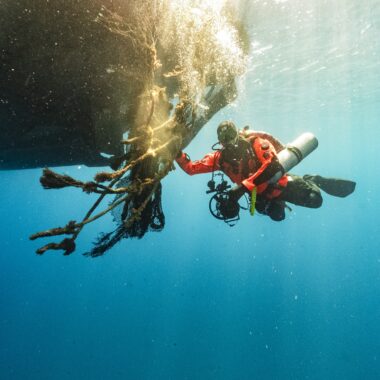
We removed what we could: nets heavy with silt, barnacles, and forgotten debris, rising like underwater smoke into the current as divers worked tirelessly to free the ocean floor.
A year later, we returned. Where plastic and silence had reigned, life had begun to reclaim its place. Tender green shoots of Posidonia oceanica swayed in the current, oxygenating the water, nurturing juvenile fish, and rebuilding the broken chain of ecosystem services. This is the kind of quiet miracle Healthy Seas exists to support.
The Biodiversity Crisis is a Business Crisis
Biodiversity — the variety of life on Earth — underpins the health of our planet. Yet it is in peril. According to IPBES, one million species face extinction. The ocean is no exception: 66% of marine areas are under growing pressure from human activity, and only 3% of marine environments remain untouched.
For business, this isn’t just an environmental issue — it’s an economic one. A 2023 PwC report reveals that over 55% of global GDP — about $58 trillion — depends on nature. And the World Bank warns that the collapse of key ecosystems could cut global GDP by $2.7 trillion by 2030.
Healthy Seas: Cleaning Oceans to Restore Balance
At Healthy Seas, we believe that every net removed from the sea is a step toward ecosystem recovery. By tackling marine pollution and recovering ghost gear, Healthy Seas plays a meaningful role in restoring habitats and supporting marine biodiversity.
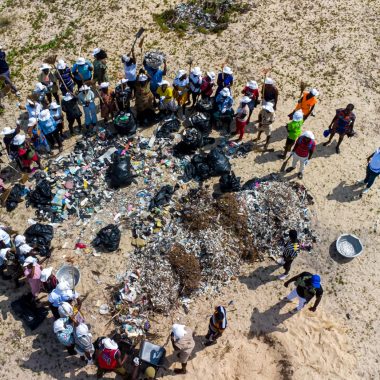
From the Gulf of Gabès, a Mediterranean biodiversity hotspot, to UNESCO-protected Lake Ohrid, our cleanups target ecologically significant areas. We also remove ghost nets from historic shipwrecks, transforming them back into safe havens for fish, invertebrates, and other species.
One of our signature initiatives, Deep Blue Legacy, supported by DWS, combines scientific research, diving operations, and education. Through a graphic novel for schools, children learn how shipwrecks serve as artificial reefs when freed from plastic pollution.
Marine Pollution and Biodiversity Loss
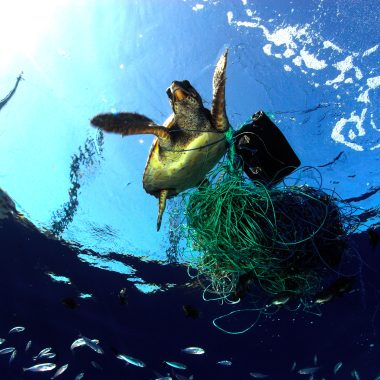
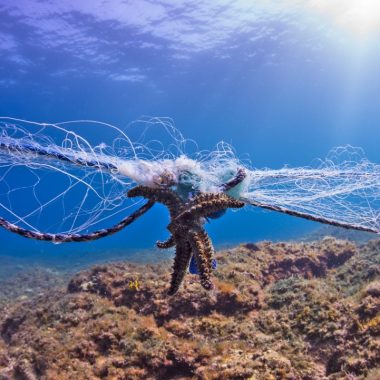
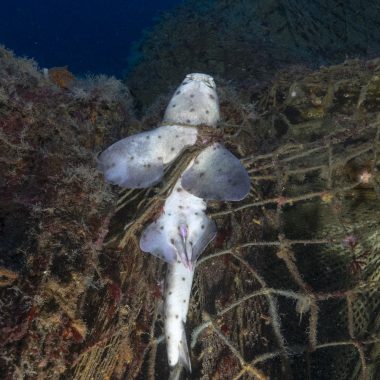
Ghost nets — abandoned or lost fishing gear — are among the most lethal threats to ocean biodiversity. They continue to trap marine life for years, leading to “ghost fishing” that decimates species populations.
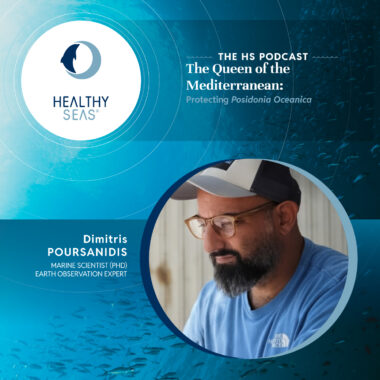
Our cleanups restore habitats for species like the Mediterranean Monk Seal and protect fragile ecosystems such as seagrass beds and coral reefs. In Ithaca, Greece, years of cleanup have led to visible regrowth of Posidonia oceanica, a seagrass vital for oxygen production, carbon storage, and habitat structure.
Cor Kuyvenhoven/Ghost Diving
Circular Economy as a Biodiversity Strategy
There’s a direct link between circularity and biodiversity. According to the Ellen MacArthur Foundation, linear systems of production and waste are among the key drivers of biodiversity loss.
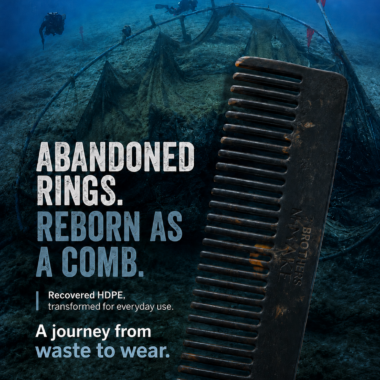
Healthy Seas contributes by partnering with companies like Aquafil, transforming waste nets and other waste materials into ECONYL® regenerated nylon, used in fashion, interiors, and sportswear. Circular design reduces reliance on virgin materials and helps preserve natural ecosystems.
Educating and Measuring for Impact
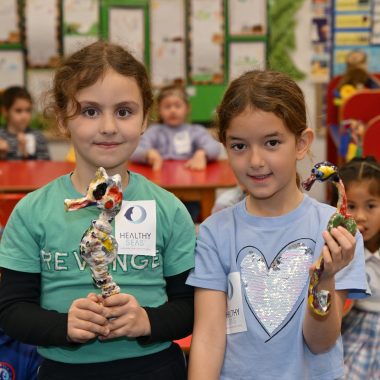
We also work on environmental education, helping young generations understand the importance of marine biodiversity. One of our recent programs in Athens explored seahorses and their habitats, showing how pollution endangers even the most delicate marine life.
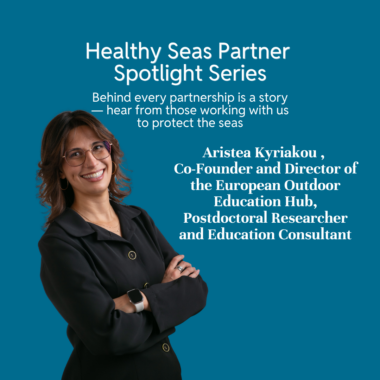
And in another program implemented with the European Outdoor Education Hub and supported by Hyundai, we developed a hands-on activity for schools called The Anatomy of the Ocean. Through simple experiments and guided observation, students explore how different materials behave underwater and how human actions can disturb fragile marine ecosystems.
Looking ahead, Healthy Seas and DWS are launching a scientific project to study biodiversity recovery following ghost net removals. This research will help us measuring the ecological impact of the clean-ups we do with our partners.
A Clear Role for Business
As sustainability reporting shifts from carbon to nature, biodiversity is rising to the top of the corporate agenda. Frameworks like TNFD, CSRD, and the Green Claims Directive are pushing businesses to disclose their impact on ecosystems — but measuring biodiversity is not easy.
By partnering with Healthy Seas, companies can:
- Directly contribute to biodiversity protection and habitat restoration
- Activate circular economy solutions
- Gain content and impact stories for their sustainability communication
- Engage employees and customers through purpose-driven initiatives
Join Us
Restoring biodiversity takes time — but every action counts. With partners like Hyundai, DWS, Arena, and many others Healthy Seas is helping bring balance back to the ocean.
Let’s rebuild what was lost. Together. Become a Partner