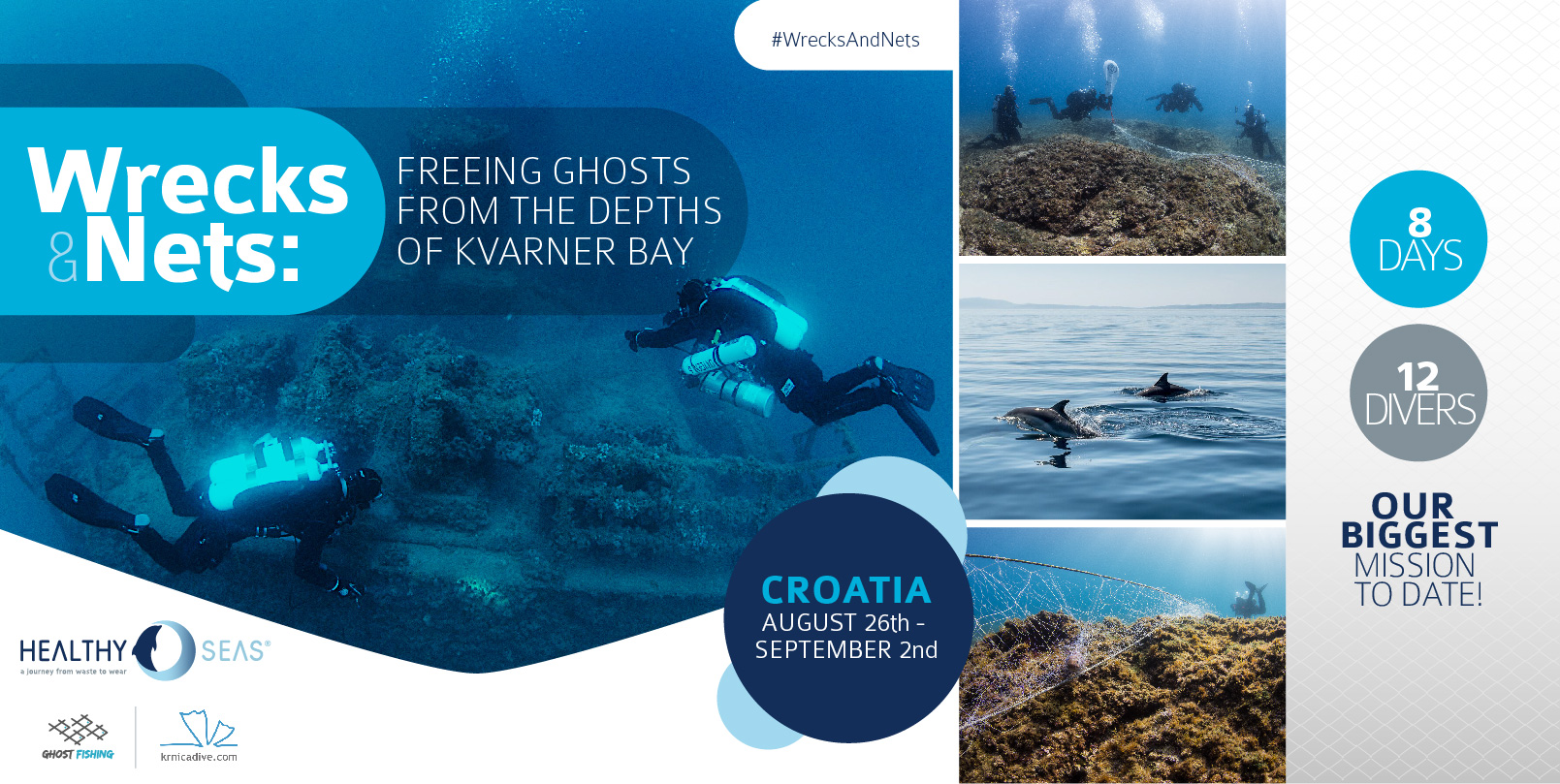

Wrecks & Nets: Freeing Ghosts from the Depths of Kvarner Bay
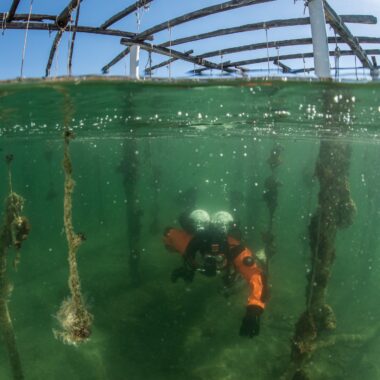
For the first time since 2014, Healthy Seas returns to the Adriatic Sea to free several shipwrecks and reefs from lost fishing gear found deep within Kvarner Bay in Croatia. From August 26th until September 2nd, a team of 12 volunteer divers from the Netherlands, Croatia, Germany, Poland, Italy and Greece will undertake a highly challenging technical diving projects, carrying out a strict dive plan at 50 meters depth using helium mix gases.
The northern Adriatic Sea is one of the most eutrophic and overfished basins in the Mediterranean Sea. Bottlenose dolphins are among the few predators regularly present in the area. Their population is established to be in a vulnerable condition, threatened by habitat degradation, food depletion and unintentional catches by fisheries.[1]
Among all Kvarner islands and particularly in the Cres-Lošinj area, lives a permanent population of approximately 180 dolphins and their protection and study is possible due to the Lošinj Dolphin Reserve.
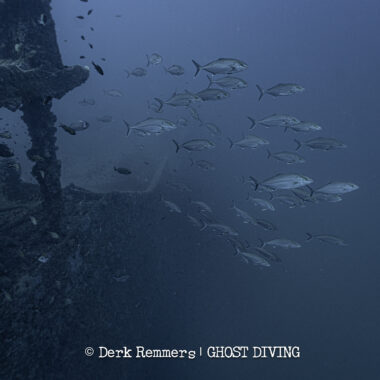
All wrecks lying the Kvarver Bay are covered with ghost nets as well as several reefs close to the shore. The diving team aims at cleaning up 3 shipwreck as well as several reefs to protect this important marine habitat.
[1] Simeoni, Cristina. (2013). University of Padua Bottlenose. Dolphins in the Northern Adriatic Sea: A long-term assessment of the population dynamics.
Main Target
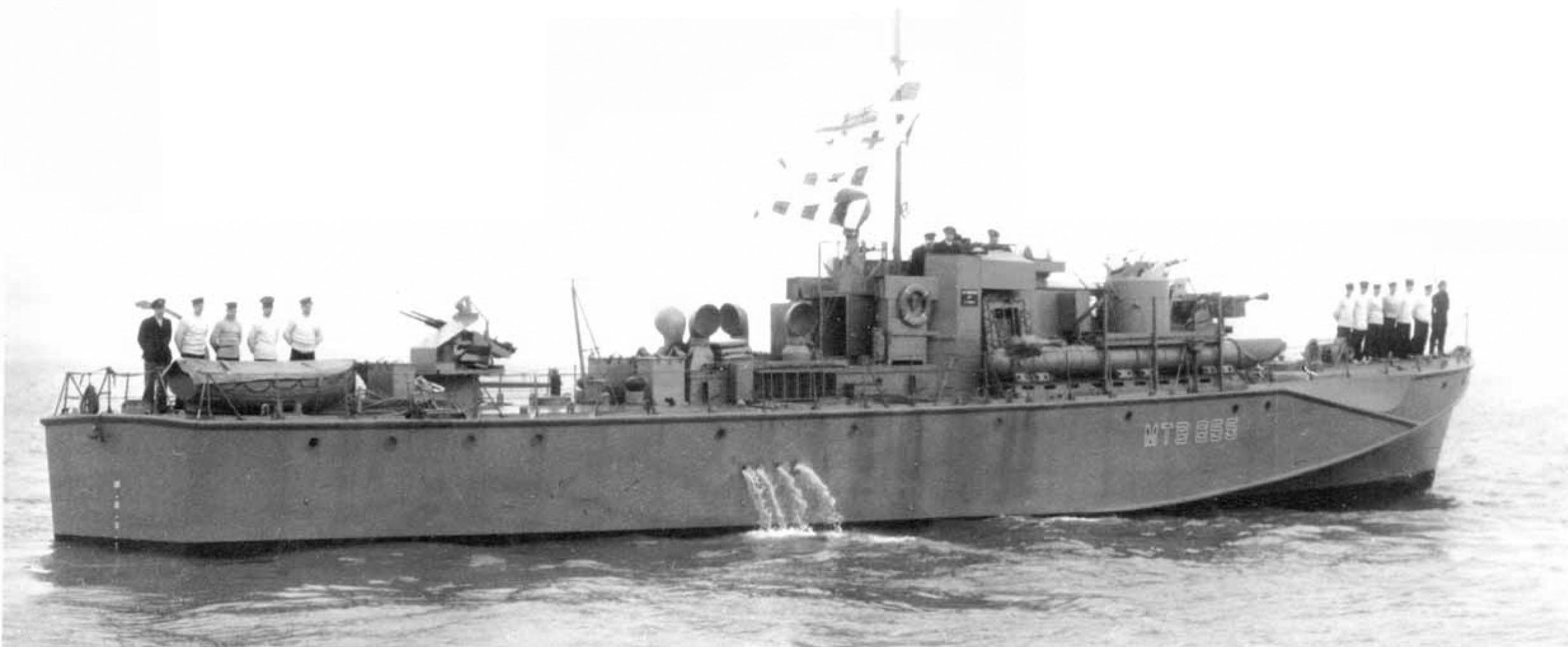 During surveys over the last few years, divers have spotted lost fishing gear at the wreck of MTB-655, a 2nd world war motor torpedo boat resting at 50 meters. MTB-655 HMS was operational at the end of the war in Zadar (Croatia) and on the night 22 March 1945 the vessel hit a mine in Kvarner Bay. The strength of the explosion made the ship break in two parts, both of which are covered by lost fishing nets.
The collected fishing nets will be cleaned and combined with other nylon waste materials by Aquafil, before being transformed into ECONYL® regenerated nylon, the infinitely recyclable material. This will provide the basis for beautiful new products such as socks, sportswear, swimwear and carpets. Healthy Seas is an excellent example for the circular economy, where waste is a resource.
This is the 3rd of 4 main events Healthy Seas will carry out during 2019, doing its part to protect the marine environment through ghost net cleanups and raising public awareness besides the regular activities organized throughout the year.
Partners: Aquafil, Racemark, Object Carpet, Ghost Diving, Ghost Diving Poland, Knica Dive,