
Partner Spotlight - From Ghost Nets to Global Awareness – Bracenet’s Journey with Healthy Seas
Madeleine von Hohenthal on responsibility, creativity, and why true impact begins with collaboration
Our Partner Spotlight series gives voice to the people behind our partnerships—the ones who turn belief into action, and support into impact. In this edition, we’re honoured to feature Madeleine von Hohenthal, Co-Founder & CEO of Bracenet GmbH, one of Healthy Seas’ earliest partners.
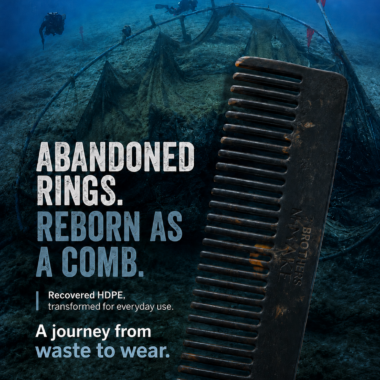
Bracenet is a social business with a bold and beautiful mission: to protect the oceans by transforming deadly ghost nets into powerful symbols of change. Since its founding, Bracenet has worked hand in hand with NGOs, divers, and waste management teams to recover and upcycle lost fishing nets into bracelets, keychains, furniture, and so much more.
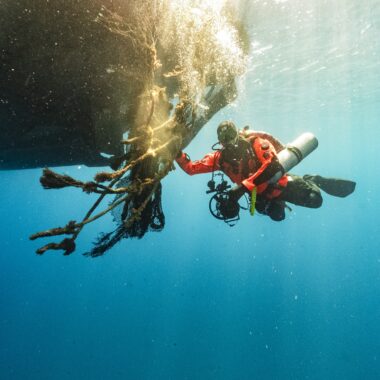
Many of the net recovery operations that Bracenet has supported over the years—both financially and through awareness campaigns—were led by Healthy Seas. From coastal cleanups to deep underwater missions, this collaboration has turned discarded fishing gear into not only beautiful products, but also a movement rooted in shared impact.
From our very first meeting years ago, the Healthy Seas–Bracenet partnership has been rooted in mutual trust, shared vision, and a belief in the power of hands-on, real-world solutions. In this interview, Madeleine reflects on the personal connection she has with the sea, what she’s learned through years of cleanup and innovation, and what she dreams of building with us next.
Q&A with Madeleine von Hohenthal, Co-Founder & CEO, Bracenet
Tell us briefly about your organisation.
Bracenet is a social business dedicated to protecting the oceans by upcycling lost and discarded fishing nets – so-called ghost nets. We recover these nets worldwide in cooperation with NGOs, fishermen and divers, and transform them into meaningful products like bracelets, keychains, lanyards, furniture and more.
Every product is a statement: Save the Seas. Wear a Net.
Since our founding, we have financed and organized countless ghost net recoveries, removed tons of dangerous material from the oceans, and turned waste into awareness. Bracenet is proof that sustainability, design, and impact can go hand in hand.
What does the ocean mean to you personally?
The ocean is my place of freedom and connection. It’s where I feel both the vastness of the world and my own responsibility within it. I am a workaholic if it comes to sustainable ideas and the ocean. So my thoughts are always for a solution against nets. As a mother, it also means future – because a healthy ocean is essential for the next generations. Protecting it isn’t just part of my work with Bracenet, it’s deeply personal: every dive, every wave, every coast I visit reminds me why this mission matters.
Earth or Mars?
Earth, without question.
I believe our task is not to look for escape plans, but to care for the home we already have. The ocean covers more than 70% of our planet – it produces half of the oxygen we breathe and regulates our climate. Why would we abandon such a miracle? Instead of investing in life on Mars, I’d rather invest in protecting Earth, so future generations can still experience its beauty.
Which is your favourite place on Earth? And why?
My favourite place on Earth is anywhere by the ocean.
Whether it’s the rough North Sea, the Mediterranean in summer, or a quiet beach in Portugal – the sea gives me strength, clarity and inspiration. It’s where Bracenet was born, where I feel most connected to nature, and where I find the freedom to dream. The ocean is never the same twice, and that constant change reminds me of life itself. I see my future self being with my family baking a cake watching the waves and be proud of what I did for the ocean in the past.
What is one small habit everyone can adopt to help reduce ocean pollution?
Say no to single use. If you can’t help on your own, place it on your brunch table, at a party or in your company. Be the idea let other people go on if you can’t.
If everyone refused plastic bags, bottles, and takeaway cups, create sustainable teams in their company we would drastically cut the amount of plastic ending up in the ocean. It’s such a small habit – carrying your own reusable bottle, bag, or cup – give an idea – but multiplied by millions of people, it can make a huge difference. Every choice counts.
What’s the most surprising thing you’ve learned about marine pollution?
The most surprising thing is how invisible marine pollution can be.
When people think of ocean pollution, they imagine plastic bottles floating on the surface. But most of the damage comes from what we don’t see: microplastics in the water, toxins in the food chain, and ghost nets silently drifting below the surface. These nets alone make up almost half of the plastic in the Great Pacific Garbage Patch – something I never expected before founding Bracenet.
What’s the most memorable thing you have experienced with/thanks to Healthy Seas?
One of the most memorable moments with Healthy Seas was my very first meeting with Veronika in the Netherlands, in their office. From the very beginning, there was this strong belief in us – me and Benjamin – that if we continue this journey together, we can truly drive change. That moment of trust and shared vision has stayed with me ever since.
If you could send one message to the world about ocean conservation, what would it be?
The ocean is our life-support system – protect it as if your life depends on it, because it does.
Every breath we take, every second heartbeat comes from the sea. We don’t need to save the ocean “for later” – we need to act now, in our daily choices, our politics, and our businesses. There is no healthy future without a healthy ocean.
Can you share a moment when you felt truly hopeful about the future of our oceans?
I feel truly hopeful every time I record an episode of our podcast Ocean Crime.
Each conversation connects me with like-minded people around the world who are fighting for the same cause. It not only grows my own network, but also informs and inspires the Bracenet community. These exchanges remind me that we are not alone – there is a strong global movement working for the future of our oceans.
What’s the most incredible transformation you’ve seen as a result of ocean cleanup efforts?
One of the most incredible transformations I’ve witnessed is seeing ghost nets turn from deadly traps into symbols of hope.
During a cleanup mission, you watch these massive, heavy, dirty nets being lifted out of the water – dangerous, destructive, scarred by years in the sea, sometimes still containing dead animals. Step by step, we clean them, cut them down, and transform them into Bracenets. Suddenly, what was once a threat to marine life becomes a bracelet on someone’s wrist, carrying a message.
What began with a single Bracenet on our kitchen table has now grown into a movement. We’ve turned nets into furniture, created merchandise items for football teams like Werder Bremen, HSV and Paris Saint-Germain as well as for the LA Lakers and even the Super Bowl. We developed pens filled with microplastics, we upcycled lanyards out of mooring ropes from cruises, keychains, luggage tags out of old fishing lines. We’ve upcycled old neoprene and diving tanks, and even melted fishnets to craft watch dials for luxury brands like Oris. We published a children’s book, integrated net material into airline seats, and so much more. I am proud if I look back.
Every single piece that leaves our hands finds its way into others, carrying the same purpose: to create something good out of what was once pure destruction.
How has your work with Healthy Seas changed your perspective on sustainability?
I believe we might not have even truly started without meeting Healthy Seas. From the very beginning, it was clear to us that this had to become a large-scale project – not just us collecting a few nets on the beach. Healthy Seas already had a global network in place, and that gave us the structure and credibility to dream bigger.
Working with them has changed my perspective on sustainability: it showed me that collaboration is the key. No single company or individual can solve ocean pollution alone. We are proud to support Healthy Seas financially so that their impact can continue to grow, and with it, the global movement for cleaner oceans. Healthy Seas was already there before ocean protection was visible, and a strong foundation is needed to build a change.
If you could solve one ocean-related issue instantly, what would it be?
If I could solve one ocean-related issue instantly, it would be ghost nets.
They make up almost half of the plastic in the Great Pacific Garbage Patch and silently kill marine life every single day. Removing them would mean immediate relief for countless animals and ecosystems – and buying us precious time to tackle the many other challenges our oceans face.
How do you see your industry evolving to support ocean sustainability in the next decade?
It starts with business and politics – every company has to act. So why not do something good, and also learn that you can use it for marketing? It’s so much cooler to actually create impressive, meaningful impact and then talk about it, rather than spending huge budgets on advertising campaigns. And I can say that with confidence, because I come from the advertising industry myself. It starts with the Bracenets, then a company creates a sustainability chapter and goes on. For real.
We need to reach people through the things they already interact with in their work and daily lives: onboarding gifts, sales presents, trade fair giveaways, or fan shop products. Right now, we are drowning in meaningless items that end up as waste, instead of creating purposeful products that carry a message. If companies learn to replace the useless with the meaningful, they will not only reduce pollution but also inspire people every single day. It’s already there – we don’t need to produce or buy things that are worthless.
This shift would not only benefit the planet, but also help companies attract young talent in times of skilled labor shortages. Authentic action inspires people far more than polished ads – and that is what will drive both sustainability and business forward.
What’s one thing you’d love to do with Healthy Seas in the future?
What I truly wish for the future with Healthy Seas is many more years of creating meaningful projects together – reaching more people, pulling even more nets out of the oceans, and above all gaining greater visibility. I don’t know any other organization that works so tirelessly on these issues, and that’s why I believe life still has so much in store for us together.
Often, the people who are excellent at their work are not the ones who are visible or social media geniuses. But we are ready to change that – to show our why and Healthy Seas’ why more strongly than ever before. Because the more people see and understand, the greater the impact we can achieve for our oceans.
What is your favourite marine animal and why?
My favourite marine animal is the comb jelly. At first glance it seems unremarkable, yet it reveals stunning colors as it moves. It has survived for over half a billion years, powered by a nervous system unlike any other. To me, it symbolizes how true beauty and resilience often lie hidden beneath the surface.
Bracenet x Healthy Seas: From Trust to Transformation
As one of Healthy Seas’ earliest partners, Bracenet has helped us turn discarded fishing gear into objects of purpose, and ideas into collective action. Their work proves that creative businesses can be catalysts for change—and that impact and beauty can, and must, go hand in hand.
Want to read more Partner Spotlights?
Catch up on inspiring interviews with Hyundai, Friedmans, Aquafil, DWS, GAMOMAT,—and stay tuned for the next one.
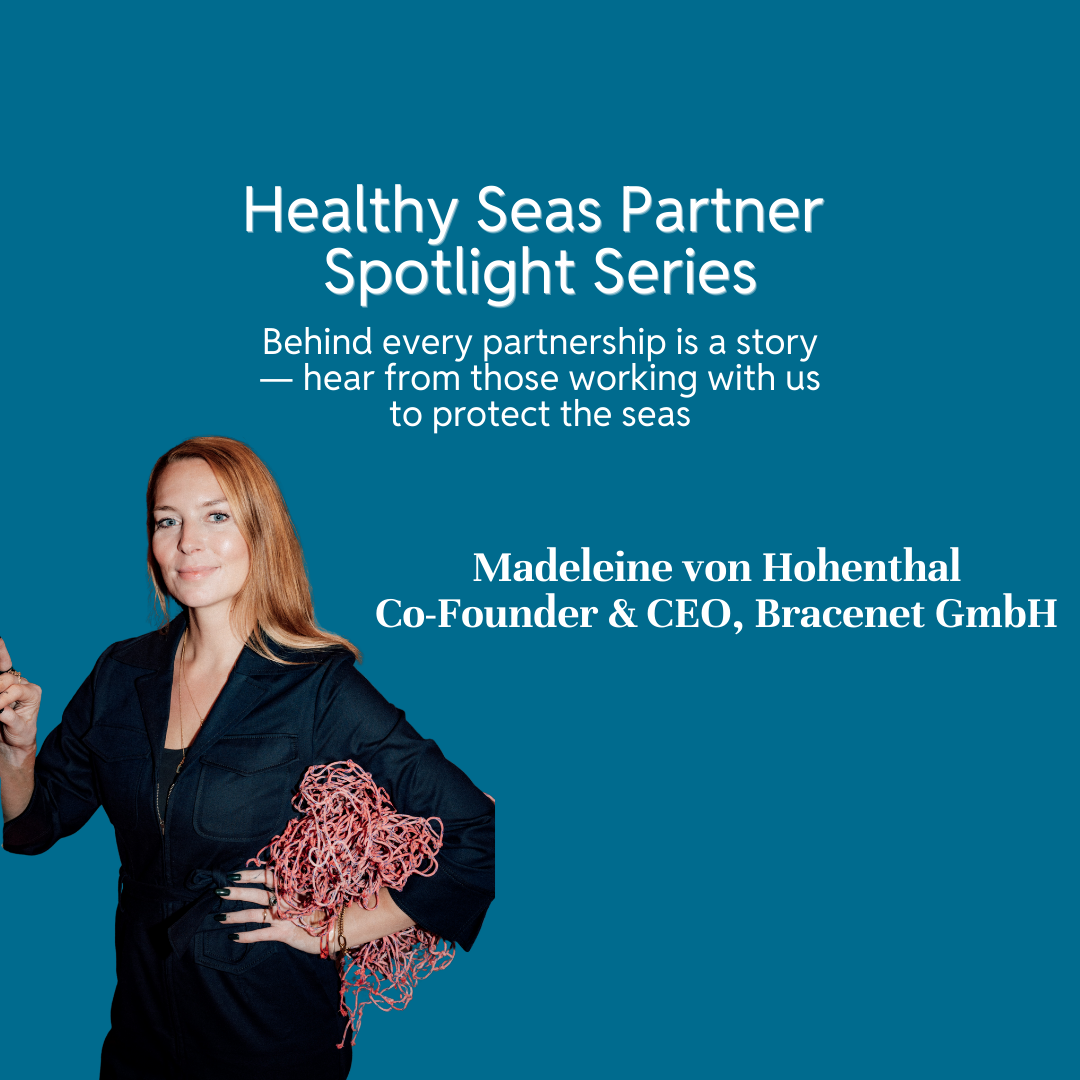
Madeleine von Hohenthal
Co-Founder & CEO, Bracenet
Check out our carrousel online